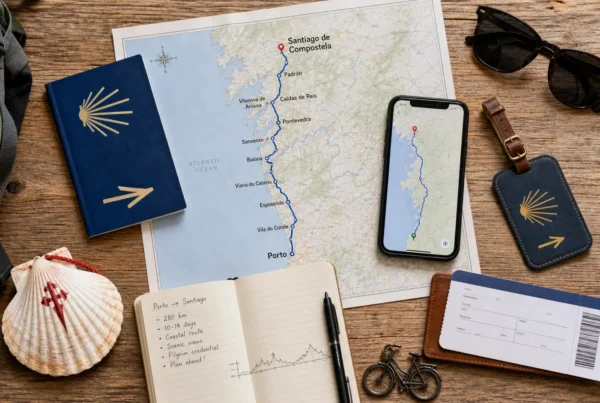
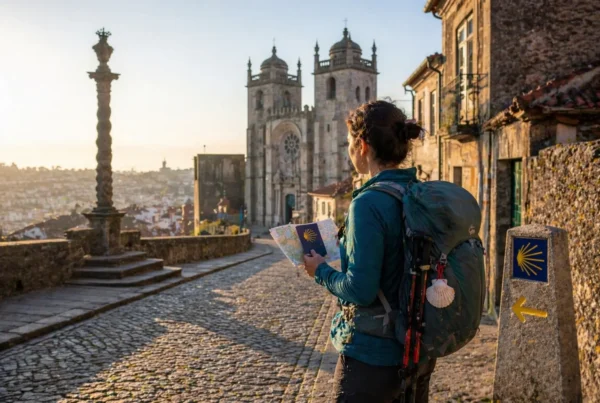
The Portuguese Coastal Way is one of the most captivating routes of the Camino Santiago. Less crowded than its inland sibling, this path hugs the Atlantic shoreline, offering a unique blend of maritime landscapes, cultural immersion, and quiet spiritual moments.
Whether you’re a first-time pilgrim or a seasoned walker seeking something different, this complete guide to the Camino Portugues by the coast will help you navigate each stage with clarity, confidence, and curiosity.
What is the Portuguese Coastal Way?
A Route with Deep Roots
The Portuguese Coastal Way traces ancient pilgrim trails that followed the Atlantic edge of Portugal and Galicia. Historically used by travelers and spiritual seekers alike, it is now one of the fastest-growing alternatives of the Camino Santiago.
Why Pilgrims Choose It
- Fewer crowds compared to the Central Route
- Spectacular coastal and rural scenery
- Authentic encounters in fishing villages and port towns
- A quieter, more reflective journey
A Route for All Walkers
From solo travelers to older pilgrims or small groups, this path adapts to different paces and interests. With growing infrastructure and supportive pilgrim communities, the experience is as safe as it is rewarding.
Overview of the Stages
| Stage | Distance | From → To | Difficulty | Notes |
| 1 | 25 km | Porto → Vila do Conde | Moderate | Urban to coast transition |
| 2 | 23 km | Vila do Conde → Esposende | Easy | Beach walks and rural paths |
| 3 | 24 km | Esposende → Viana do Castelo | Moderate | Historic towns and estuary views |
| 4 | 33 km | Viana do Castelo → A Guarda | Challenging | Ferry to Spain required |
| 5 | 31 km | A Guarda → Baiona | Moderate | Rugged coastal cliffs |
| 6 | 23 km | Baiona → Vigo | Moderate | Urban finish |
| 7 | 15 km | Vigo → Redondela | Easy | Option to extend via Arcade |
| 8 | 19 km | Redondela → Pontevedra | Moderate | Forest paths and riverside |
| 9 | 21 km | Pontevedra → Caldas de Reis | Easy | Thermal town finish |
| 10 | 19 km | Caldas de Reis → Padrón | Easy | Optional detour to Herbón |
| 11 | 24 km | Padrón → Santiago | Moderate | Emotional final ascent |
Stage-by-Stage Breakdown
Stage 1: Porto → Vila do Conde
- Distance: 25 km
- Time: 6 to 7 hours
- Terrain: Urban start, flat coastal promenade
- Points of Interest: Dom Luís I Bridge, Igreja de Matosinhos
- Accommodation: Albergue de Vila do Conde
- Pilgrim Tip: Start early to avoid the mid-morning heat near the shoreline.
- Historical Note: Vila do Conde’s name comes from its medieval countship.
Stage 2: Vila do Conde → Esposende
- Distance: 23 km
- Time: 5 to 6 hours
- Terrain: Coastal roads, sandy paths, and rural tracks
- Points of Interest: Caxinas fishing quarter, São Bartolomeu Chapel
- Accommodation: Albergue de Peregrinos de Esposende
- Pilgrim Tip: Parts of the beach route can be windy—pack a light windbreaker.
- Cultural Note: Esposende is known for its shipbuilding and maritime traditions.
Stage 3: Esposende → Viana do Castelo
- Distance: 24 km
- Time: 6 to 7 hours
- Terrain: Undulating trails and river estuaries
- Points of Interest: Foz do Cávado, Santa Luzia Basilica
- Accommodation: HI Viana do Castelo Hostel
- Pilgrim Tip: Try the ferry crossing at the Lima River to save time.
- Cultural Note: Viana is famous for its filigree goldwork and festivals.
Stage 4: Viana do Castelo → A Guarda
- Distance: 33 km (includes ferry)
- Time: 8 to 9 hours
- Terrain: Scenic coastal tracks with a ferry crossing into Spain
- Points of Interest: Caminha, ferry to A Guarda, Celtic hillfort of Santa Trega
- Accommodation: Albergue Municipal de A Guarda
- Pilgrim Tip: Confirm ferry schedules in advance, especially outside summer.
- Historical Note: A Guarda marks the entry into Galicia, Spain.
Stage 5: A Guarda → Baiona
- Distance: 31 km
- Time: 7 to 8 hours
- Terrain: Cliff paths and small fishing villages
- Points of Interest: Oia Monastery, Cape Silleiro lighthouse
- Accommodation: Pensión El Mosquito (Baiona)
- Pilgrim Tip: Pack snacks—there are fewer cafés along this stage.
- Cultural Note: Baiona was the first port to hear of the discovery of America.
Stage 6: Baiona → Vigo
- Distance: 23 km
- Time: 6 to 7 hours
- Terrain: Coastal then urban, with industrial sections
- Points of Interest: Ramallosa bridge, seaside promenades
- Accommodation: Senda Sur Hostel (Vigo)
- Pilgrim Tip: Consider the scenic coastal detour to avoid industrial areas.
- Cultural Note: Vigo is one of Galicia’s largest cities with rich seafood culture.
Stage 7: Vigo → Redondela
- Distance: 15 km
- Time: 4 to 5 hours
- Terrain: Urban exit followed by natural trails
- Points of Interest: Arcade estuary, viaducts of Redondela
- Accommodation: Albergue Casa da Herba
- Pilgrim Tip: Great short stage to rest or adjust pace.
- Cultural Note: Known for oysters and Roman bridges.
Stage 8: Redondela → Pontevedra
- Distance: 19 km
- Time: 5 to 6 hours
- Terrain: Lush woodlands and cobblestone paths
- Points of Interest: Roman Road, Chapel of Santa Marta
- Accommodation: Albergue O Marco
- Pilgrim Tip: Stop for lunch in Arcade, known for grilled shellfish.
- Cultural Note: Pontevedra has one of Galicia’s best-preserved old towns.
Stage 9: Pontevedra → Caldas de Reis
- Distance: 21 km
- Time: 5 hours
- Terrain: Woodland trails, gentle inclines
- Points of Interest: San Amaro village, Lombo da Maceira viewpoints
- Accommodation: Albergue Timón
- Pilgrim Tip: Pack a towel and swimwear to enjoy the thermal springs.
- Cultural Note: Roman roots still shape Caldas’s spa tradition.
Stage 10: Caldas de Reis → Padrón
- Distance: 19 km
- Time: 4 to 5 hours
- Terrain: Forests, vineyards, rural lanes
- Points of Interest: Valga village, Herbón Monastery (optional)
- Accommodation: Albergue de Padrón
- Pilgrim Tip: Try the local Padrón peppers in town.
- Cultural Note: Believed to be where Saint James’s body came ashore.
Stage 11: Padrón → Santiago
- Distance: 24 km
- Time: 5 to 6 hours
- Terrain: Rural paths and gradual climbs into Santiago
- Points of Interest: A Escravitude Sanctuary, Milladoiro viewpoint, Cathedral of Santiago
- Accommodation: Seminario Menor or Parador de Santiago
- Pilgrim Tip: Arrive early to attend the Pilgrim Mass.
- Historical Note: Santiago de Compostela is a UNESCO World Heritage Site.
Practical Tips for a Smooth Camino
- Stay Hydrated and Snack Smart: Carry at least one liter of water and sip regularly. Opt for high-energy, easy-to-carry snacks such as dried fruit, mixed nuts, energy bars, and fresh bread from local bakeries.
- Start Early: Aim to leave by sunrise. Cooler temperatures make walking easier, and early starts allow for a relaxed pace and buffer time for rest or exploration.
- Foot Care Essentials: Use breathable, broken-in footwear and change your socks midway through the day to prevent blisters. Let your feet breathe during long breaks and treat any hot spots immediately.
- Pace Yourself: Listen to your body. Avoid rushing, especially in the first few stages. Gradually build your pace and stamina. Use walking poles if you need extra joint support.
- Rest Days Are OK: Don’t hesitate to take a break. Towns like Viana do Castelo, Baiona, and Pontevedra are ideal for a restorative overnight stay or even a full rest day.
- Navigation Tips: Although the trail is well marked, carry a digital map offline (such as Wisely+ or Maps.me) and confirm signage at tricky junctions.
- Budget Wisely: Many albergues are donation-based, but it’s courteous to contribute. Pilgrim menus typically cost €10–€15 and offer great value.
- Pack Light but Smart: Essentials only. Keep your pack under 10% of your body weight. Prioritize quick-drying clothes and a waterproof layer.
- Know Alternative Routes: If fatigue sets in, consider staying in smaller towns between main stages. Local taxis or buses are also reliable options to skip or shorten sections.
- Respect Local Culture: Greet fellow pilgrims with a simple “Buen Camino” and be mindful in shared spaces. Support local businesses along the route.
These tips are based on the experiences of seasoned pilgrims and will help you complete each stage of the Portuguese Coastal Way with confidence and joy.
Final Checklist for Your Journey
Before setting off on the Portuguese Coastal Way, take a moment to double-check that you have everything you need for a safe, comfortable, and meaningful experience. Preparation is key to enjoying the Camino with confidence.
Essentials to Carry:
- Valid ID and Pilgrim Credential: Required for albergue stays and to obtain your Compostela.
- Backpack Basics: Layered clothing for changing weather, a compact first-aid kit, sunscreen, a reusable water bottle, and a lightweight towel.
- Footwear and Socks: Well-worn, breathable walking shoes and moisture-wicking socks. Blister prevention is crucial.
- Navigation Tools: Offline maps or a dedicated Camino app such as Wisely+, Buen Camino App, or printed stage guides.
Recommended Extras:
- Earplugs and Sleep Mask: For shared accommodations.
- Portable Charger: To keep your phone and apps running throughout the day.
- Rain Gear: A packable poncho or lightweight rain jacket, especially in Galicia.
- Reusable Container or Cutlery: Handy for trail snacks or take-away meals.
For an in-depth gear list and expert recommendations, visit our Ultimate Packing Guide.
Safety and Well-Being
Your safety and well-being are essential components of a successful Camino experience. Here are key considerations every pilgrim should keep in mind:
- Medical Support Access: Health centers and pharmacies are available in major towns along the route, including Esposende, Vigo, and Pontevedra. Always know the nearest one to your current location.
- Emergency Contact: Dial 112 in both Portugal and Spain for any urgent assistance. This number covers medical emergencies, fire, and police services.
- Traveling Solo: The Portuguese Coastal Way is widely regarded as safe for both women and solo travelers. That said, avoid walking isolated sections late in the day, and always inform someone of your intended destination.
- First-Aid Knowledge: Learn basic first-aid skills. Carry essentials such as blister pads, antiseptic wipes, and a small bandage kit.
- Sun Protection: Many parts of the route are exposed. Wear a wide-brim hat, apply sunscreen regularly, and take breaks in shaded areas when possible.
- Stay Alert: While crime is rare, stay aware of your belongings in urban areas. Use a money belt or internal pouch for valuables.
- Group Safety: If you prefer companionship, consider connecting with others via the Pilgrims of the Coast WhatsApp Community.
FAQ – Frequently Asked Questions
When is the best time to walk the Coastal Way?
The ideal months are April to June and September to October, when the weather is mild and the route is less crowded. Summer months can be hotter and busier, while winter brings more rain and limited services.
Should I book accommodation in advance?
During peak season or in major cities like Porto and Santiago, it is recommended to reserve in advance. In quieter months, most pilgrims find accommodation easily upon arrival, especially in smaller towns and albergues.
Is it safe to walk alone?
Yes. The Portuguese Coastal Way is well-marked, regularly traveled, and considered safe for solo walkers, including women. Still, it’s wise to start early, inform someone of your daily route, and avoid walking isolated stretches after dark.
How fit do I need to be?
While no extreme fitness is required, a basic level of endurance helps. Daily walks average between 15 to 25 kilometers. Prepare by walking with your gear for at least two weeks prior to departure.
Can I walk the Camino with dietary restrictions?
Yes. Many restaurants cater to vegetarians and offer simple, adaptable meals. However, vegan or gluten-free options are less common outside cities, so carrying essentials is wise.
Are there ATMs along the way?
Yes, most towns and cities have ATMs. Always carry some cash, as small cafés and albergues may not accept cards.
Do I need to speak Portuguese or Spanish?
Not necessarily. Basic phrases help, but many locals along the Camino are accustomed to pilgrims and understand English or use gestures effectively. Learning a few key words adds to the experience.
Can I get my Compostela if I walk only the coastal route?
Absolutely. As long as you walk at least the last 100 km into Santiago and collect stamps in your Pilgrim Credential, you are eligible to receive the Compostela certificate.
Conclusion
The Portuguese Coastal Way is more than a pilgrimage. It is a path of beauty, silence, connection, and reflection. With each step, you walk through history and present-day hospitality, discovering a deeper connection to yourself and to others.
Let this guide support you throughout your journey. And when you stand in Praza do Obradoiro in Santiago de Compostela, you will carry every memory as a part of your story.
If this resource helped you, consider sharing it with someone preparing for their Camino. Buen Camino.