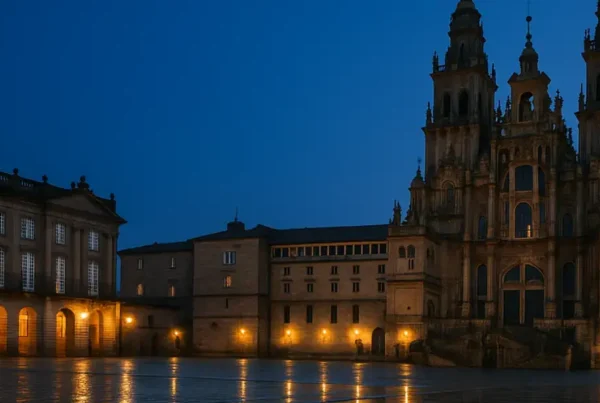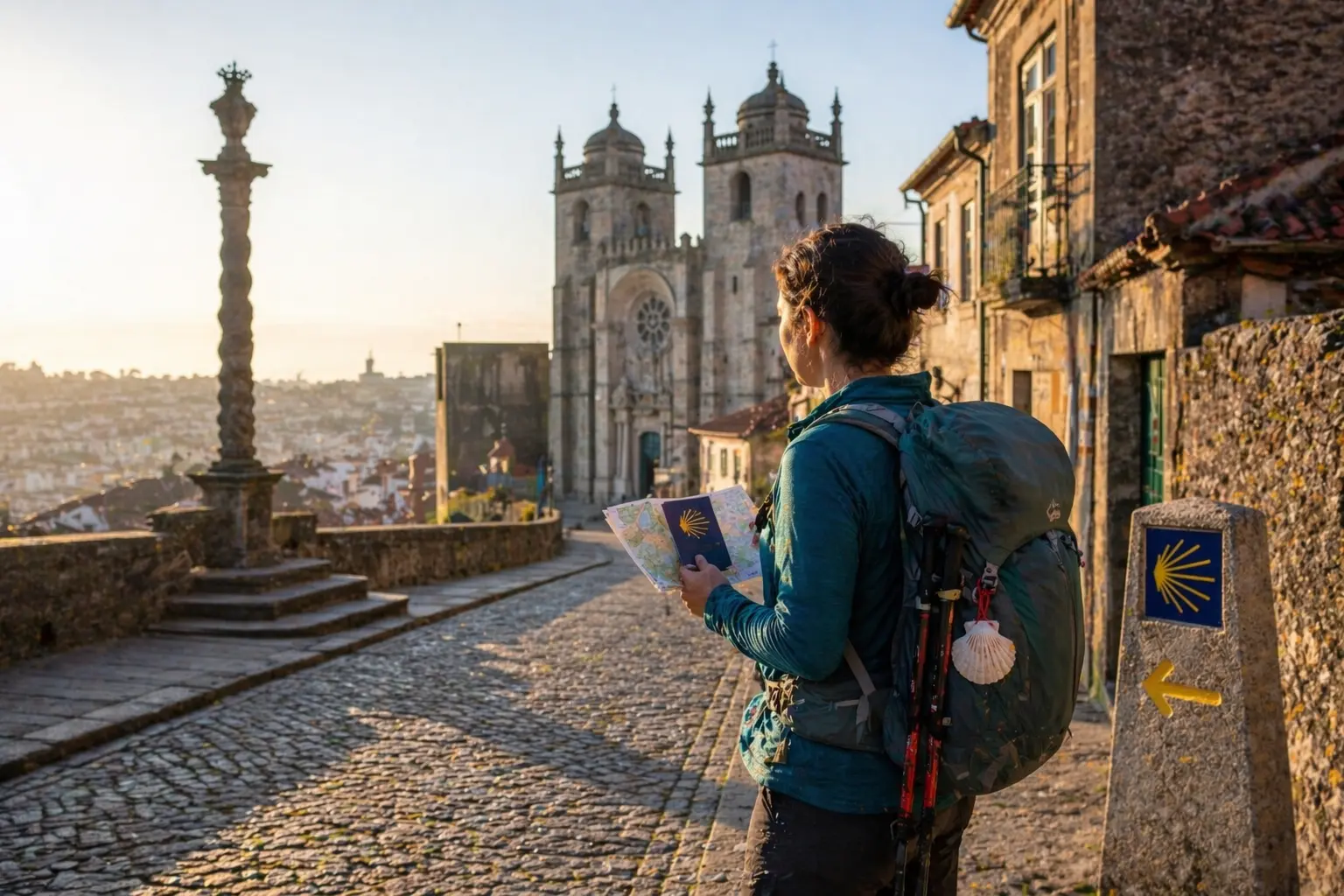
The Portuguese Coastal Camino is no longer a quiet alternative that only a few experienced pilgrims choose. In 2026, the route is entering the main Camino conversation: more pilgrims are using the coast, Porto has a new pilgrim support office near the cathedral, and Portugal has launched a seasonal safety operation that explicitly includes the Portuguese Coastal Camino.
For travelers planning to start in Porto, that matters. The route is still beautiful, Atlantic-facing, and flexible. But it also deserves more deliberate planning than it used to.
This guide explains what changed in 2026, what it means on the ground, and how to plan a smarter walk from Porto to Santiago.
Key takeaways
- Portugal’s GNR launched Operation “Bom Caminho 2026” from April 20 to October 31, with the Portuguese Coastal Camino included in the patrol area.
- Porto now has a Pilgrim Office near the Sé, giving pilgrims a more organized starting point for information and logistics.
- The Portuguese Coastal Camino has moved from “scenic alternative” to major international route, with close to 90,000 pilgrims recorded in 2025 by Compostela-based statistics.
- The certified Portuguese section of the Coastal route runs from Porto to the Galician border at Valença, with 137.9 km divided into 9 official stages.
- For 2026, the smart approach is to book key nights earlier, verify route choices before leaving Porto, and treat safety, baggage logistics, and timing as part of the route plan.
What changed on the Portuguese Coastal Camino in 2026?
| 2026 update | What changed | Why it matters for pilgrims |
| Operation “Bom Caminho 2026” | More visible GNR patrols between April 20 and October 31 | Better safety presence on Portuguese Camino routes during the main walking season |
| Porto Pilgrim Office | A new pilgrim support point opened near Porto Cathedral | Easier access to route information, credentials, stamps, and first-day guidance |
| Renewed route management focus | Recent institutional meetings and certification work have pushed route governance higher on the agenda | More attention to signage, safety, infrastructure, and long-term quality |
| Continued growth | The Coastal route recorded roughly 89,000 pilgrims in 2025 by Compostela-based data | Expect more demand for beds, baggage transfer, and services during peak months |
These are not cosmetic updates. Together, they show a route that is becoming more organized, more visible, and more dependent on good planning.
Is the Portuguese Coastal Camino getting too busy?
Not too busy to enjoy. But too busy to treat casually.
The Portuguese Coastal Camino still offers long Atlantic stretches, fishing towns, river crossings, beaches, boardwalks, and slower moments that feel very different from the most crowded parts of the Camino Francés. But it is no longer a hidden route.
In 2025, the Portuguese Coastal route recorded about 89,000 pilgrims in Compostela-based statistics. That number does not capture every person who walked part of the route, and it only reflects pilgrims counted through the Compostela system. Still, it is enough to show the trend: this is now one of the major Camino routes.
The practical implication is simple. If you are walking from Porto in May, June, September, or early October, assume the route will be active. Not necessarily overcrowded every day, but active enough that accommodation, luggage transfer, and transport pinch points deserve attention.
For a fuller crowd and seasonality breakdown, read our guide to whether the Portuguese Coastal Camino will be busy in 2026.
The new Porto Pilgrim Office gives the route a better starting point
Porto is one of the most important starting points for the Portuguese routes to Santiago. It is also one of the places where first-time pilgrims can feel most unsure.
That is because Porto is not just a starting city. It is a decision point.
From Porto, you may be choosing between:
- the Portuguese Coastal Camino;
- the Senda Litoral;
- the Portuguese Central route;
- a hybrid version that uses coastal and inland sections;
- a shorter itinerary that starts later, such as Tui.
The new Pilgrim Office near the Sé matters because it gives pilgrims a physical place to ask route questions before the first walking day. That is especially useful for travelers flying in from the United States, arriving by train, or building a self-guided itinerary without a tour company.
Use it as a first practical stop, not as a substitute for planning. Before you arrive, you should still know your intended first stage, where you plan to sleep, whether you want to follow the coast or the Senda Litoral, and how you plan to handle your backpack.
If you are comparing logistics, our guide to baggage transfer from Porto on the Portuguese Coastal Camino is the next useful planning step.
What Operation “Bom Caminho 2026” means for safety
Operation “Bom Caminho 2026” is a seasonal GNR operation in Portugal. It covers the Portuguese Camino, the Portuguese Coastal Camino, and the Portuguese Interior Camino from April 20 to October 31.
For pilgrims, the main point is more visible policing and proximity patrols in areas connected to the Caminos. The operation focuses on safety, crime prevention, support for pilgrims, protection of cultural heritage, and environmental protection.
That is good news, but it should not create a false sense of immunity. The Coastal route has a varied risk profile. Depending on the day, you may walk through urban exits, beach boardwalks, forested areas, roadside sections, small towns, and border areas.
The useful takeaway is not “the route is risk-free.” It is this: the Portuguese authorities are treating the route as a significant corridor during the walking season, and pilgrims should match that with basic planning discipline.
Practical safety habits for 2026
- Walk during daylight when possible.
- Keep your ID with you, not inside transferred luggage.
- Use marked routes rather than improvised shortcuts.
- Wear visible clothing on road sections.
- Keep one person informed of your daily stage plan.
- Save Portugal’s emergency number, 112.
- Pay extra attention when you leave cities, cross roads, or walk near traffic.
- Do not leave valuables unattended in cafés, hostels, beaches, or luggage pickup areas.
None of this should scare you away from the route. It should make your planning sharper.
The route is more organized, but it is still flexible
One reason the Portuguese Coastal Camino appeals to adventure travelers is that it does not feel rigid. You can build a classic itinerary, follow more of the coastline, connect inland, slow down for photography, or shorten the walk by starting closer to Santiago.
That flexibility is a strength, but it also creates confusion.
In Portugal, the officially certified Coastal route runs from Porto to the Galician border at Valença. In practice, many pilgrims think of the Coastal Camino as the broader journey from Porto through coastal northern Portugal and Galicia, often via Caminha, A Guarda, Baiona, Vigo, and Redondela before joining the Central route toward Santiago.
That distinction matters because different guides, apps, tour companies, and local sources may describe the route in slightly different ways.
Before booking accommodation, check three things:
- Which variant you are actually following.
- Where your route crosses into Galicia.
- Whether your accommodation is on your chosen line or a detour away from it.
This is especially important if you plan to mix the Coastal route and the Senda Litoral. They can feel similar in marketing copy, but they are not always the same walking line.
Should you still start in Porto in 2026?
Yes, if you want the full northern Portugal experience and have enough days.
Starting in Porto gives you the strongest sense of progression: city, coast, fishing towns, rivers, Minho landscapes, Galicia, and finally Santiago. It also gives you access to better pre-walk services, including the new Pilgrim Office and a wider choice of baggage transfer companies, hotels, hostels, and transport.
But Porto is not the only smart option.
Starting in Tui may be better if you have limited time, want to qualify for the Compostela with a shorter walk, or prefer the more established final stretch from Galicia. If that sounds closer to your situation, compare the trade-offs in our guide to starting the Portuguese Way in Tui.
Start in Porto if you want:
- a longer adventure;
- more Atlantic scenery;
- a stronger Portugal-to-Galicia transition;
- more flexibility between coastal and inland choices;
- a trip that feels less like a short final push and more like a full journey.
Start in Tui if you want:
- fewer walking days;
- a simpler Compostela-focused itinerary;
- more predictable infrastructure on the final stretch;
- less pre-trip complexity;
- easier planning for a first Camino with limited vacation time.
Neither option is “better” for everyone. Porto is better for the full Coastal experience. Tui is better for a shorter and simpler Camino.
What adventure travelers should plan differently in 2026
The biggest mistake in 2026 is assuming that the Coastal route is still loose enough to plan one day at a time during the main season.
You can still keep some flexibility. But you should lock down the parts that are hardest to fix at the last minute.
Book strategic nights earlier
You do not necessarily need to pre-book every bed months in advance. But for peak months, consider booking your first night after Porto, key coastal towns, and any weekend stays earlier than you normally would.
This matters more if you want private rooms, are traveling as a couple, or need specific services such as laundry, baggage pickup, or early breakfast.
Decide your backpack strategy before day one
The Coastal Camino is very walkable with a light backpack, but not everyone wants to carry full gear. If you plan to use luggage transfer, arrange it before the first stage rather than scrambling after you are already tired.
This is especially relevant for travelers who want a more comfortable adventure travel experience, or who plan to walk longer stages without carrying everything.
Build in weather flexibility
Coastal walking means exposure. Wind, rain, fog, and strong sun can all shape your day. Do not design an itinerary that only works in perfect weather.
A good 2026 itinerary should include:
- realistic daily distances;
- at least one shorter day after a long stage;
- accommodation that is not too far from food or services;
- a backup transport option for difficult weather or injury;
- enough time in Porto before departure to start calmly.
Use the route as a cultural corridor, not just a trail
The recent institutional focus on certification and management is a reminder that the Coastal Camino is not just a line on a map. It passes through living towns, coastal ecosystems, religious sites, local economies, and border communities.
That is part of the value. Slow down where it matters. Eat locally, respect dunes and boardwalks, avoid unnecessary shortcuts through sensitive areas, and treat small towns as more than refueling stops.
For visual planning, build time around viewpoints, fishing towns, river crossings, and old centers. Our guide to photo spots on the Portuguese Coastal Camino can help you choose where not to rush.
2026 planning checklist for the Portuguese Coastal Camino
Use this as a practical pre-trip check before you arrive in Porto.
Before booking flights
- Decide whether you are walking from Porto, Tui, or another starting point.
- Check how many walking days you actually have, excluding arrival and departure days.
- Choose your preferred season and avoid assuming that “coastal” means cool weather every day.
- Estimate your total trip budget, including accommodation, food, laundry, transfers, and rest days.
For budget planning, use our Portuguese Coastal Camino budget tips before you commit to dates.
Before leaving for Portugal
- Confirm your first two nights of accommodation.
- Decide whether you will carry your backpack or use baggage transfer.
- Save offline maps or GPX files if you use them.
- Know whether you are following the Coastal route, the Senda Litoral, or a hybrid.
- Check opening hours for any office, hostel, or service you plan to use.
- Pack visible clothing or a reflective item for road sections.
- Keep your credential, ID, bank card, and phone with you during the day.
In Porto before day one
- Visit the area around the Sé and confirm your starting point.
- Use the Pilgrim Office if you need route guidance, credential help, or first-day orientation.
- Reconfirm your accommodation and luggage transfer if applicable.
- Buy snacks and water before leaving the city.
- Start earlier than you think you need to, especially in warmer months.
2026 planning checklist for the Portuguese Coastal Camino
Use this as a practical pre-trip check before you arrive in Porto.
Before booking flights
- Decide whether you are walking from Porto, Tui, or another starting point.
- Check how many walking days you actually have, excluding arrival and departure days.
- Choose your preferred season and avoid assuming that “coastal” means cool weather every day.
- Estimate your total trip budget, including accommodation, food, laundry, transfers, and rest days.
For budget planning, use our Portuguese Coastal Camino budget tips before you commit to dates.
Before leaving for Portugal
- Confirm your first two nights of accommodation.
- Decide whether you will carry your backpack or use baggage transfer.
- Save offline maps or GPX files if you use them.
- Know whether you are following the Coastal route, the Senda Litoral, or a hybrid.
- Check opening hours for any office, hostel, or service you plan to use.
- Pack visible clothing or a reflective item for road sections.
- Keep your credential, ID, bank card, and phone with you during the day.
In Porto before day one
- Visit the area around the Sé and confirm your starting point.
- Use the Pilgrim Office if you need route guidance, credential help, or first-day orientation.
- Reconfirm your accommodation and luggage transfer if applicable.
- Buy snacks and water before leaving the city.
- Start earlier than you think you need to, especially in warmer months.
FAQ
Is the Portuguese Coastal Camino safe in 2026?
Yes, it is generally a well-established Camino route, and the 2026 GNR operation adds a visible safety presence on the Portuguese section during the main season. That said, pilgrims should still use normal precautions, especially on road sections, in isolated areas, and in crowded accommodation or transit points.
What is new for pilgrims starting in Porto in 2026?
The biggest new support point is the Pilgrim Office near Porto Cathedral. It gives pilgrims a more organized place to ask practical questions, prepare credentials, and confirm basic route information before leaving the city.
Is the Portuguese Coastal Camino now crowded?
It depends on the month and stage. The route is clearly growing and can feel busy in peak periods, especially around popular starting points and towns with limited accommodation. It is not automatically overcrowded, but it is no longer a route to plan casually in high season.
Should I follow the Coastal route or the Senda Litoral from Porto?
The best choice depends on your priorities. The Senda Litoral often appeals to walkers who want to stay closer to the ocean, while the Coastal Camino may follow a more established inland-coastal line in some sections. Check your exact stage plan before booking accommodation because the names are sometimes used loosely.
Can I use baggage transfer from Porto?
Yes, baggage transfer is available from Porto through several services, but you should compare coverage, pickup rules, prices, and supported accommodation before day one. This is especially important if you plan to mix route variants.
Is Porto or Tui the better starting point?
Porto is better if you want a fuller journey through northern Portugal and the coast. Tui is better if you have fewer days and want a simpler final Camino stretch that still meets the minimum walking distance for the Compostela.
The practical next step
If you are planning the Portuguese Coastal Camino in 2026, start by choosing your route style: full coastal journey from Porto, shorter Compostela-focused walk from Tui, or a hybrid version with selected coastal stages.
Then book the parts that reduce stress: your first nights, your backpack strategy, and your key transport points. The route is still rich, scenic, and rewarding. It just rewards preparation more than it used to.