The Padrón to Santiago Camino is the final walking stage for many pilgrims on the Portuguese Coastal Camino. The official Galician route lists it at 24.8 km, which makes it a realistic one-day stage for many walkers, but that does not automatically mean you should treat it like every other day.
Your arrival time, remaining energy, accommodation, Compostela plans and onward travel all affect how the final stage should be organised. The better question is not simply “Can I walk 25 km?” It is “How do I want my final day to work once I reach Santiago?”
Key takeaways
- The official Camino de Santiago in Galicia route lists Padrón to Santiago at 24.8 km and rates the stage as low difficulty.
- Different guides and tracking apps may show figures closer to 23 to 25 km because endpoints, route choices and measurement methods differ.
- Walking the full stage in one day works well if roughly 25 km already fits your normal Camino pace and you are not rushing onward from Santiago.
- Splitting the stage can make sense if you want a short final morning and more time in Santiago, but check accommodation before building the trip around that plan.
- If you plan to request the Compostela, check your credential before leaving Padrón and allow time for the Pilgrim’s Reception Office after arrival.
How far is the Camino from Padrón to Santiago?
The official Camino de Santiago in Galicia stage page currently gives a distance of 24.8 km from Padrón to Santiago de Compostela, with an estimated walking time of five hours and a low difficulty rating.
Use 24.8 km as the primary planning reference, but do not be concerned if another guide or your navigation app shows a slightly different total. Your accommodation may not sit directly on the official route, GPS measurements vary and different sources may use slightly different endpoints in Padrón or Santiago.
The practical implication is simple: plan for a day of roughly 25 km rather than designing your schedule around one exact decimal figure.
The official difficulty label also needs context. “Low difficulty” describes the route itself. A 24.8 km final stage can still feel substantial after several consecutive walking days, especially if your comfortable daily distance has been shorter.
Should you walk Padrón to Santiago in one day or split the final stage?
Both approaches can work. The choice should depend on how you want to arrive in Santiago rather than on the idea that completing the full stage in one day is somehow more authentic.
| Plan | Best for | Main tradeoff | What to confirm |
|---|---|---|---|
| Walk Padrón to Santiago in one day | Pilgrims already comfortable with days around 25 km | Less time in Santiago if you arrive later than expected | Your Santiago accommodation and what you want to do after arrival |
| Split before Santiago | Pilgrims who want a shorter, less rushed final morning | Requires another accommodation decision outside the standard Padrón stage ending | Actual accommodation availability near your chosen stopping point |
| Keep the final day flexible | Pilgrims unsure how tired they will feel by Padrón | Less certainty if your accommodation strategy depends on advance bookings | Which stopping options remain realistic for your dates |
Walking the full stage works well when 25 km is already normal for you
If you have been walking similar distances comfortably, the standard stage is straightforward to understand: leave Padrón, follow the official route through the intermediate settlements and continue into Santiago.
The main planning mistake is adding too many commitments after the walk. Reaching Santiago is not the same as finishing all of your Santiago logistics. You may want time at the cathedral, time to check into your accommodation, time at the Pilgrim’s Reception Office and simply some unstructured time after the walk.
Splitting the stage is useful when the arrival matters more than the mileage
The official route passes through the Teo area and then O Milladoiro before the final approach to Santiago. That creates possibilities for pilgrims who want to stop before the city and complete a shorter final walk the next morning.
O Milladoiro is particularly close to Santiago on the official stage, but do not decide to split there purely because it looks convenient on a map. Check your actual accommodation options and their location relative to the marked Camino first.
A split can be a better fit if your priority is reaching Santiago earlier in the day, having more time in the city or avoiding a final morning built around a strict timetable.
What should you expect on the route from Padrón to Santiago?
The official route divides the stage broadly through A Escravitude and O Milladoiro before the final urban approach to Santiago.
Padrón to A Escravitude
The route leaves Padrón, crosses the Sar and passes through Iria Flavia before continuing through smaller settlements towards A Escravitude.
Do not treat the first kilometres as disposable distance just because Santiago is the main objective. Starting too fast can make the second half of a roughly 25 km day less comfortable than necessary.
A Escravitude towards O Milladoiro
From A Escravitude, the route continues through the Teo area and a succession of smaller communities before reaching O Milladoiro.
This middle part of the stage is where your final-day plan matters most. If you have been measuring progress only by kilometres remaining, fatigue can make the last approach feel longer than expected. Keep your normal walking rhythm rather than treating the final stage as a race to the cathedral.
O Milladoiro to Santiago
From O Milladoiro, Santiago is close enough for the character of the day to change. The route descends towards A Rocha Vella and crosses the Sar before entering the city.
The official route identifies two well-marked alternatives on the urban approach, one through Santa Marta de Abaixo and another through Conxo. They later converge around Rúa Rosalía de Castro. If your map and another pilgrim appear to take slightly different signed approaches here, that does not automatically mean one of you has left the Camino.
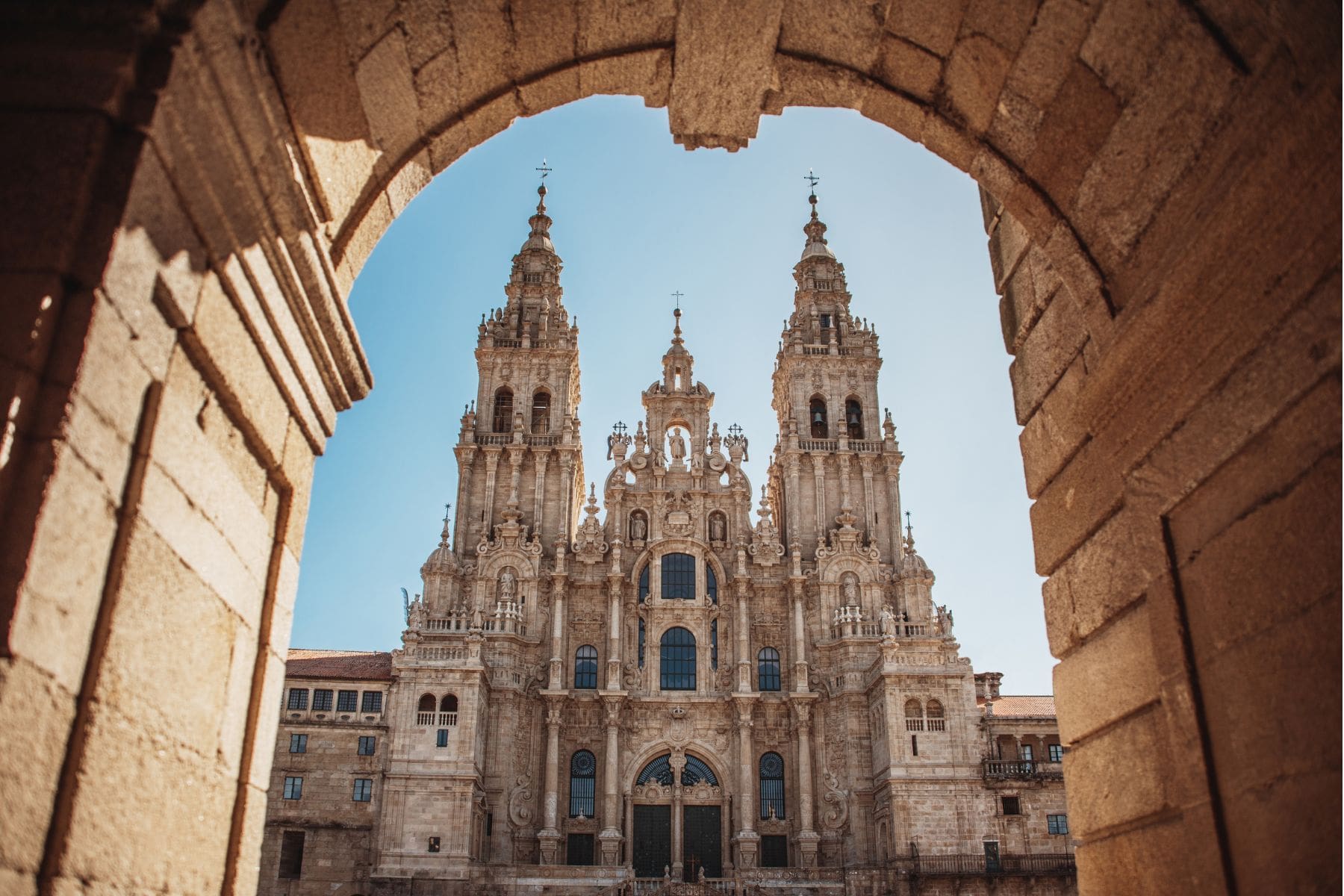
The traditional Portuguese Camino approach then continues into the historic centre, with the cathedral reached through the old-city streets.
What time should you leave Padrón?
There is no universal departure time that works for every pilgrim. Work backwards from what you actually want to do in Santiago.
If you only need to walk, check in and enjoy the city, your normal Camino departure routine may be enough. If you also want to deal with the Compostela, visit the cathedral or meet onward transport, you need more margin.
Use these questions before deciding:
- How long have your recent 20 to 25 km stages actually taken, including breaks?
- Is your Santiago accommodation available when you expect to arrive?
- Do you intend to request the Compostela on the same day?
- Are you planning a train, bus or flight after finishing?
- Would arriving one or two hours later materially affect the rest of your day?
Practical rule: do not build a tight flight or long onward journey around an assumed five-hour walking time. The official estimate describes the route, not your full final-day logistics.
For the wider arrival and departure sequence, see our guide to Portuguese Coastal Camino logistics in 2026.
What should you organise the night before the final stage?
Padrón is the right place to remove avoidable decisions from your final morning.
- Check your credential. Make sure your stamps and dates are in order rather than discovering a gap after reaching Santiago.
- Confirm your Santiago accommodation. Save the address somewhere easy to access and check whether it sits before or beyond the cathedral relative to your arrival route.
- Decide whether you are walking the full stage. If you are considering a split, resolve the accommodation question before leaving.
- Check the forecast. Adjust your departure time and clothing to the actual conditions rather than to what previous stages were like.
- Keep the final kilometres simple. Put anything you regularly need during the day where you can reach it without unpacking your whole backpack.
- Separate arrival tasks from walking tasks. Decide which things genuinely need to happen on arrival day and which can wait until the following morning.
If you still need to confirm the stamp rules, read our Camino credential and stamps guide before the final morning.
What do you need to know about the Compostela before reaching Santiago?
The Cathedral’s Pilgrim’s Reception Office currently states that pilgrims walking to Santiago must complete at least 100 continuous kilometres on the same recognised route, with the final stage leading into Santiago, to meet the distance requirement for the Compostela.
The credential is the evidence used to document the pilgrimage. The official guidance also requires at least two stamps per day over the qualifying final 100 km for pilgrims on foot.
Do not wait until Santiago to work out whether your credential meets the requirement. Padrón is the last sensible checkpoint.
The Compostela also has a religious purpose. The Cathedral describes it as an accreditation for pilgrims who make the pilgrimage for Christian or spiritual reasons. If your objective is primarily to document the distance walked rather than request the Compostela, check the Cathedral’s current certificate options directly.
What happens when you arrive in Santiago?
Reaching the cathedral and dealing with the Pilgrim’s Reception Office are two separate steps.
The official Pilgrim’s Reception Office is currently at Rúa Carretas 33. Its published procedure requires pilgrims collecting the Compostela to obtain a ticket with a QR code that shows their position in the queue.
The office also warns that during periods of high pilgrim volume it cannot guarantee that everyone will collect the Compostela on the same day.
That is another reason not to attach a rigid onward-travel deadline to your arrival. If receiving the Compostela matters to you, leave enough flexibility for the process rather than assuming you can walk into Santiago and immediately collect it.
Current opening information and procedures can change, so check the official Pilgrim’s Reception Office shortly before your final stage.
Common first-timer mistakes on the final stage
- Treating the official five-hour estimate as a deadline. Stops, weather, fatigue and your accommodation location all affect the real day.
- Walking faster because Santiago is close. The final kilometres still count towards a roughly 25 km stage.
- Booking onward transport too tightly. Finishing the walk does not mean you have finished check-in, cathedral or Compostela logistics.
- Ignoring the credential until Santiago. Check it in Padrón while you can still resolve questions before arrival.
- Assuming every map must show exactly the same urban approach. The official route itself recognises two signed alternatives before they converge in Santiago.
- Splitting the stage without checking the stop. A shorter final morning only helps if your overnight location actually works with the route.
Your next step
Before you leave Padrón, make three decisions: whether you are walking the full stage, what you want to accomplish after reaching Santiago and how much time you need between arrival and any onward commitment.
If the full 24.8 km fits your normal walking range, keeping Padrón to Santiago as one stage is the simplest plan. If the arrival experience matters more than completing the standard stage in one day, consider a split only after you have confirmed where you can actually stay.
If you are still designing the days that lead into Padrón, compare the wider Portuguese Coastal Camino stages from Porto before locking your final nights.