Doing laundry on the Portuguese Coastal Camino is not especially complicated. The harder part is making sure your clothes are dry before you leave the next morning.
You can wash small items by hand where your accommodation permits it, use a washing machine at an equipped albergue, or find a self-service laundromat along your route. But these options are not available at every overnight stop, and freshly washed clothes do not always dry overnight.
The practical approach is to carry a small rotation of clothing, wash regularly and plan around drying conditions rather than assuming that every evening will go according to plan.
Key takeaways
- Handwashing socks, underwear and lightweight shirts can work well, but check where your accommodation allows laundry.
- Some albergues provide washing machines, dryers and clotheslines. Others may offer fewer facilities, so confirm before relying on them.
- Drying is often the main problem, particularly during rainy or humid weather in northern Portugal and Galicia.
- Keep enough spare clothing to manage a delayed wash or an overnight drying failure.
- You do not normally need a dedicated rest day for laundry. An earlier arrival or shorter walking stage can create a useful washing window.
Where can you wash clothes on the Portuguese Coastal Camino?
There are four practical options: handwashing at your accommodation, using an albergue washing machine, visiting a self-service laundromat, or arranging a laundry service through your accommodation where one is offered.
The right choice depends on how much clothing needs washing, when you arrive, what facilities are available and whether your clothes need to be dry the following morning.
| Laundry option | Best for | Main limitation | What to check |
|---|---|---|---|
| Handwashing | Socks, underwear and a few lightweight items | Drying may take longer than expected | Permitted washing area and drying space |
| Albergue washing machine | Several garments or a shared load | Machine access may be limited | Price, detergent, machine access and dryer availability |
| Self-service laundromat | A larger wash or a reliable machine-drying option | Requires time and a suitable location | Opening hours, payment method and available machines |
| Accommodation laundry service | Pilgrims who prefer not to wash their own clothing | May cost more or require additional time | Price, return time and whether the service is offered |
Do albergues have washing machines and dryers?
Some do, but facilities vary.
For example, the Albergue de Peregrinos do Porto lists a washing machine, tumble dryer, large washing sink and clothesline among its facilities.
In Spain, the official public pilgrim-hostel network in Galicia also identifies laundry facilities as part of its accommodation infrastructure. Its hostel guidance instructs guests to use designated clotheslines for drying.
These examples show that laundry facilities are part of Camino accommodation. They do not mean that every property has a dryer, that every machine is available on arrival, or that the same washing rules apply everywhere.
Practical rule: If machine washing or drying is essential for your next walking day, confirm the facilities before choosing that night’s accommodation.
How should you wash clothes by hand at an albergue?
Handwashing is useful when you only need to clean a small number of garments. It avoids waiting for a full machine load and requires very little equipment.
The important first step is to ask where washing is allowed. A bathroom sink is not automatically a designated laundry sink, particularly in shared accommodation.
- Find the permitted washing area. Ask the hospitalero or accommodation staff whether there is a laundry sink or another suitable place.
- Use a small amount of detergent. Choose a product suitable for your clothing and follow its instructions. Avoid excessive soap.
- Wash the garments gently. Pay attention to socks, collars and areas that collect sweat. Follow the garment’s care label.
- Rinse thoroughly. Remove the detergent and gently squeeze out excess water without damaging the fabric.
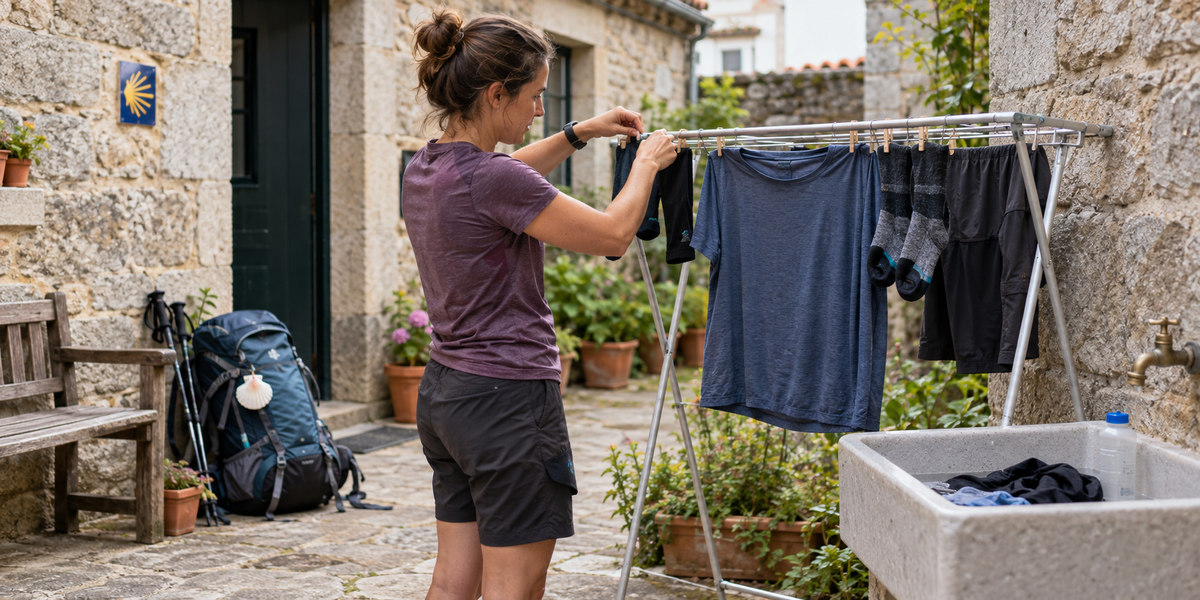
- Use the designated drying area. Spread garments out with enough space for air to circulate.
- Leave the area clean. Remove your clothes when dry and make space for other pilgrims.
Handwashing makes the most sense for a few small items. If you arrive with several days of dirty clothing, a machine may be a better use of your evening.
Will your clothes dry overnight on the Portuguese Coastal Camino?
Not necessarily. This is the part of laundry planning that deserves the most attention.
The Portuguese Coastal Camino runs through northern Portugal and Galicia, where wet or humid weather can make air-drying less predictable. Even lightweight hiking clothes may still feel damp the next morning.
Several factors influence drying:
- How much water remains in the garment after washing
- The thickness and material of the clothing
- Air circulation around the drying area
- Indoor or outdoor humidity
- Rain and available shelter
- How early you wash your clothes
Socks, waistbands and thicker fabric sections deserve particular attention. A shirt may feel dry while another item from the same wash still contains moisture.
Clothing marketed as quick-drying can improve your chances, but that description is not a promise that it will dry overnight.
How can you improve your drying chances without a dryer?
Start your laundry soon after arriving rather than leaving it until the end of the evening.
After rinsing, remove excess water carefully. If the garment permits it, you can roll it inside a clean, dry towel that belongs to you and press gently to absorb additional moisture.
Hang items separately on an approved clothesline or drying rack. Avoid folding thick garments over themselves if a more open arrangement is possible.
Do not assume that radiators, bunk beds, windows or shared furniture can be used for drying. Follow the accommodation’s rules, particularly in communal sleeping areas.
What should you do if your clothes are still wet in the morning?
First, use the dry clothing you kept in reserve.
If a suitable dryer is available, check whether the garment’s care label permits machine drying. Otherwise, look for a laundromat or another drying opportunity at your next stop.
Keep damp garments separate from clean, dry items in your backpack, and take them out to dry again as soon as practical. Do not leave damp clothes sealed inside your pack longer than necessary.
The important lesson is not that every load must dry in one night. It is that your walking plan should not depend on that outcome.
How often should you do laundry while walking?
There is no fixed schedule that suits every pilgrim.
A useful approach combines small regular washes with an occasional larger load when facilities and timing make that convenient.
For example, you might handwash socks or underwear after a walking day, then use a washing machine when you have accumulated enough clothing and have access to a dryer or suitable drying area.
That approach reduces the amount of clothing you need to carry without turning every evening into a full laundry session.
There is also no requirement to wash every garment after every stage. Use your own judgement, the condition of the clothing and its care instructions.
The better question is: How many clean, dry changes of clothing do you need between realistic washing opportunities?
How many clothes should you carry if you plan to wash regularly?
Your laundry routine should influence your packing list, not the other way around.
For a first-time pilgrim, a practical starting point might include:
- Two or three lightweight walking tops
- Two walking bottoms, or one main pair and a lighter alternative
- Several changes of underwear
- Several pairs of walking socks
- A clean set of clothing suitable for evenings or accommodation
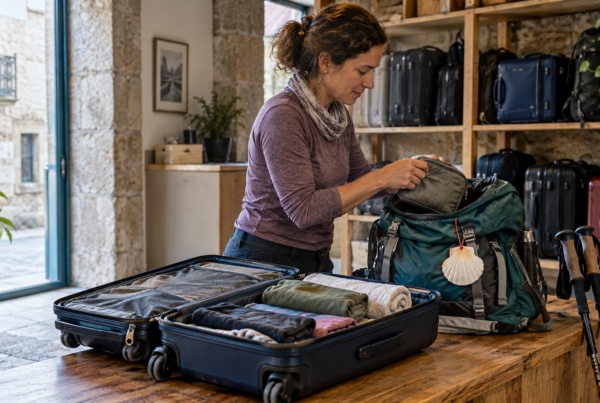
- A small bag to separate dirty or damp items from clean clothing
These are starting suggestions, not compulsory quantities. The best rotation depends on your season, how quickly your own clothes dry and whether you expect to use washing machines.
If you carry only two sets of walking clothes and one remains wet, you have little flexibility. Adding one small spare item may be more useful than carrying heavier clothing that rarely gets worn.
For the wider equipment decision, see our Portuguese Coastal Camino packing list for first-time pilgrims.
How should rainy weather change your laundry plan?
When several wet days are possible, plan your laundry around access to a dryer rather than relying entirely on outdoor drying.
This does not mean you need to book hotels or private rooms for the whole Camino. It means identifying the occasions when your normal routine may not work.
Consider three adjustments:
- Keep one dry clothing reserve. Protect it inside your backpack and avoid washing every spare garment at once.
- Prioritise accommodation with suitable laundry facilities when necessary. Confirm dryer access rather than assuming that a washing machine solves the whole problem.
- Avoid washing everything late at night. If you expect a long walking day or poor drying conditions, postpone a larger wash until a more suitable stop.
A rainy forecast should also influence how you protect clean clothing while walking. Our guide to rainy-day planning on the Portuguese Coastal Camino explains how to adapt your stage and equipment decisions.
Do you need a rest day to do laundry?
Usually not.
If you arrive with enough time to wash and dry a few items, laundry can fit into a normal walking day. A shorter stage may provide a better opportunity for a larger machine wash.
A full rest day can be useful if you already want time off walking, have several practical tasks to complete, or need to reorganise your trip. But taking an entire day off solely for laundry is not normally necessary.
There is an important distinction between a rest day and an early arrival. You might achieve the time you need simply by planning one shorter walking stage at a location where laundry facilities are available.
If you are deciding how much flexibility to include in your schedule, our guide to rest days and shorter stages on the Portuguese Coastal Camino explains the tradeoffs.
What should you check before choosing accommodation for laundry?
A listing that mentions laundry may not tell you everything you need to know.
Before relying on a particular accommodation for a larger wash, check:
- Is there a washing machine for guest use?
- Is there a tumble dryer, or only a clothesline?
- Are the facilities self-service or operated by staff?
- What does washing and drying cost, and how can you pay?
- Is detergent included, or should you bring your own?
- Are there restrictions on machine use or evening laundry times?
- Is there enough time to complete your wash before you need to leave?
If you need to search for a laundromat independently, useful local terms include “lavandaria self-service” in Portugal and “lavandería autoservicio” in Spain.
Check the specific business’s location and hours rather than assuming that a town has a convenient laundromat near your accommodation.
A simple laundry routine for your Camino
You do not need a detailed laundry schedule for every town. A repeatable routine is usually enough.
| When | What to do | Why it helps |
|---|---|---|
| Before departure | Test how long your walking clothes take to dry at home | Reveals whether your clothing rotation is realistic |
| When choosing accommodation | Check laundry facilities if you expect to need them | Avoids depending on unavailable equipment |
| After arriving | Wash necessary items early | Allows more drying time |
| Before bed | Check which garments are still damp | Helps you prepare for the next stage |
| Before departure | Separate damp clothing and confirm a dry change | Keeps clean clothes protected |
This routine is especially useful if you carry your own backpack and want to keep clothing weight under control.
Frequently asked questions about laundry on the Portuguese Coastal Camino
Can I wash my clothes in an albergue sink?
Only where the accommodation permits it. Some properties have dedicated laundry sinks or washing areas. Ask staff before using a bathroom or communal sink for clothing.
Do all Camino albergues have dryers?
No. Some advertise washing machines and tumble dryers, while others provide a clothesline or different laundry arrangements. Check the facilities of the specific accommodation before relying on a dryer.
Should I bring laundry detergent?
A small quantity can be useful if you expect to handwash clothes. If you plan to use washing machines, check whether detergent is supplied or included in the service. Choose a product appropriate for your garments and pack it securely.
Can I share a washing machine with other pilgrims?
It may be practical if everyone agrees and the accommodation permits it. Agree on who pays, how clothes will be separated and whether garments need different washing settings.
Is handwashing enough for the whole Camino?
It can work for someone carrying a small clothing rotation who has access to suitable washing and drying spaces. However, rainy weather, thicker garments or limited drying time may make occasional machine washing and drying more practical.
Your next step before leaving Porto
Before your Camino, test a normal wash of the shirts, socks and underwear you intend to carry. Find out how quickly they dry in real conditions.
Then identify at least one point in your planned itinerary where you could use a washing machine and dryer if necessary. Confirm the facilities before relying on that stop.
Finally, pack enough spare clothing that one unsuccessful drying night does not determine what you must wear the next morning.
That is the simplest way to make laundry a small part of your daily routine rather than a recurring problem on the way to Santiago.