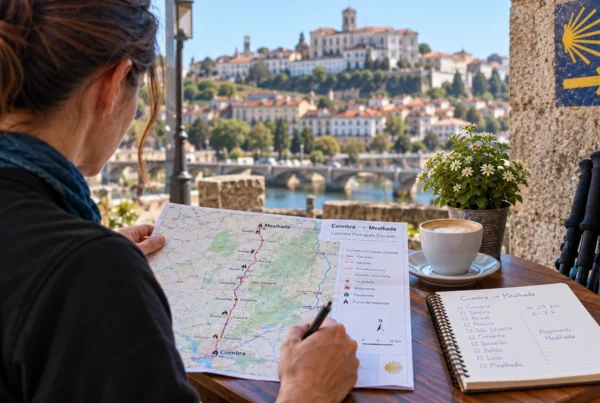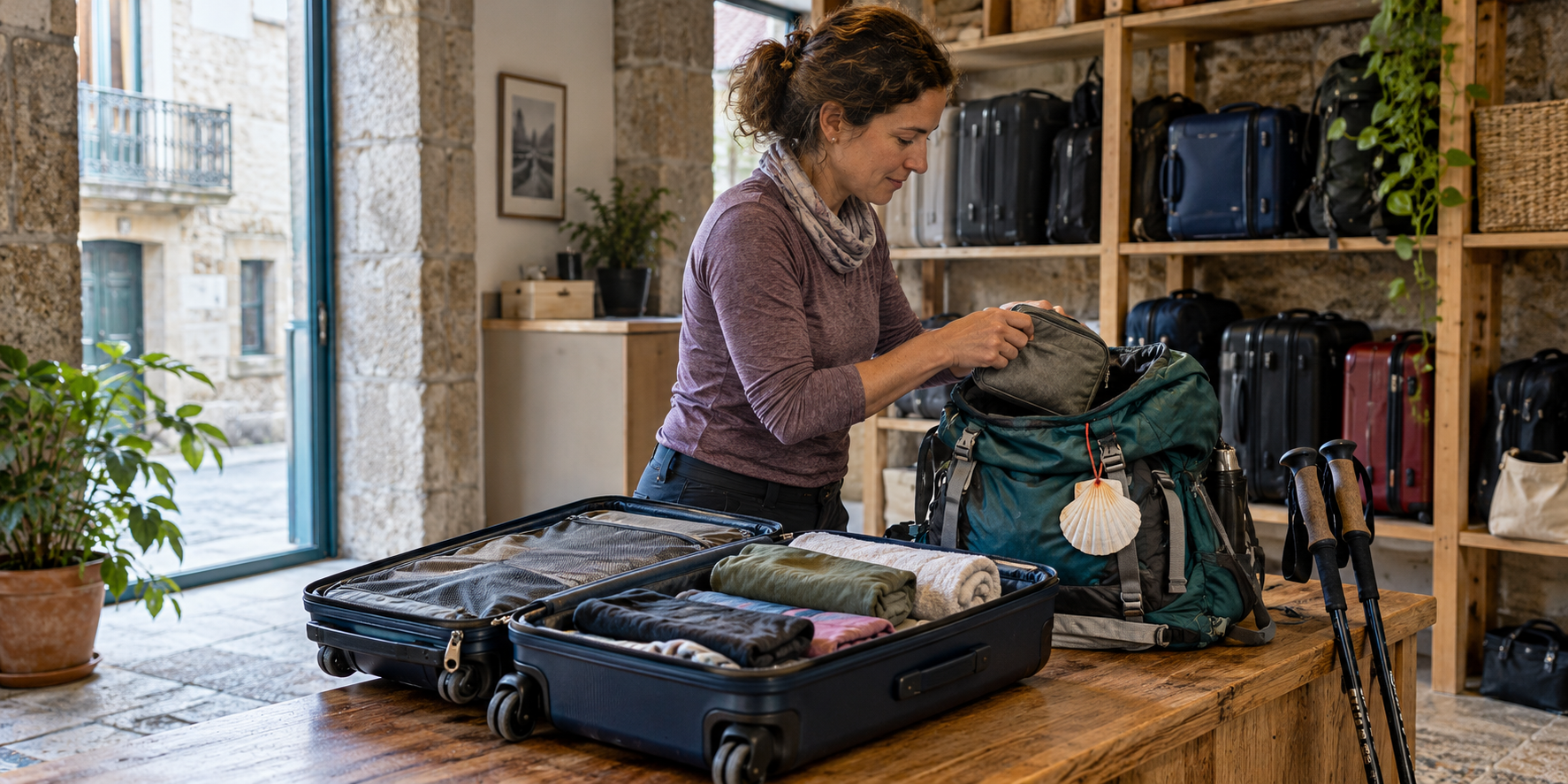
If you have extra luggage on the Portuguese Coastal Camino, start with where you will need it next. Storing a suitcase in Porto can make sense if your journey already brings you back there. Sending it to Santiago can be a better fit if you will continue your trip from Spain, provided the delivery and collection dates work.
This decision concerns clothes, shoes or other belongings you will not use during the walk. It is especially relevant if the Camino sits between other parts of a longer trip.
Service information checked on October 12, 2026. Confirm the terms for your own dates before paying.
Key takeaways
- Choose the collection city around your onward journey, rather than the first storage offer you find.
- Keeping a suitcase in Porto requires a workable return and collection plan. Sending it to Santiago requires enough time for transport and an agreed place to collect it.
- Compare the full cost, including the number of storage days, any extra holding fees and travel needed to retrieve the bag.
- A direct shipment has different rules from daily baggage transfer. Check the exact service name and its own conditions.
- Keep everything you need during the walk separate before handing over the extra bag.
Which option fits your journey after the Camino?
Write down your likely departure city and the date you will need the suitcase again. Those two details help you choose between the options below.
| Option | Best fit | Costs to include | Main check |
|---|---|---|---|
| Store the bag in Porto | You already plan to return to Porto and can collect it before leaving. | Storage for every billed day, plus any extra travel or overnight stay needed for collection. | Can you reach the storage location during its collection hours? |
| Send the bag to Santiago | You want the suitcase at the end of the walk or will continue your trip from Santiago. | Transport, any storage charges before or after delivery, and travel to the collection point. | Will the bag be available before your onward departure? |
For example, a return flight from Porto might make local storage straightforward if you have time to collect the bag. If you finish walking in Santiago and continue elsewhere in Spain, returning to Porto solely for a suitcase adds another journey to your plan.
Neither choice is automatically cheaper. A low daily storage rate can add up across the whole trip, while a transport price may leave storage or collection details unresolved.
Where can you store extra luggage in Porto?
The Porto Pilgrim Office’s luggage storage service lists a charge of €5 per day, per bag. Its published arrangement is to leave the luggage at the office and collect it on your return. Transport to Santiago can be requested separately.
Before choosing it, confirm that the office can hold the bag until your return, how billable days are counted and when you can collect it. Plan the collection before committing to a tight airport connection.
You can also ask your Porto accommodation whether it will hold a bag for the whole period between your stays. Get agreement for the actual dates, size of bag and collection time. Permission to leave luggage for a few hours after checkout does not establish permission to leave it for the duration of the Camino.
How can you send a suitcase from Porto to Santiago?
Two arrangements worth checking are Correos’ direct service and transport coordinated by the Porto Pilgrim Office.
Correos: Paq Mochila Directo
The Correos Porto-to-Santiago service lists a 2026 price of €50 per backpack or suitcase, including VAT. Collection is from the specified accommodation in Porto; the destination is the main Correos office at Rúa do Franco, 4, in Santiago.
The product page asks you to attach the supplied label and leave the bag ready before 8:00 a.m. It currently advertises this service from Porto through October 31, 2026. Dates beyond that season, including 2027, need confirmation.
Check the specific Paq Mochila Directo conditions before booking. The maximum is 30 kg and 80 × 50 × 30 cm. Allow up to seven days from collection in Porto; the terms permit pickup in Santiago from the seventh day, with your booking number. Book before 8:00 p.m. mainland Spanish time on the day before collection.
This timing matters if you plan a short walk. Confirm the earliest collection date for your booking before arranging onward travel. Your arrival in Santiago does not determine when the bag becomes available.
Ask how long the bag can remain in Santiago, what storage is included and what happens if your arrival date changes. The specific conditions give no clear maximum holding period.
Transport arranged through the Porto Pilgrim Office
The Porto Pilgrim Office’s direct luggage transport information lists €50 for bags up to 18 kg and €60 for heavier bags or large items. Independent partners operate the transport; the office helps arrange it.
The page identifies Hotel Loop Inn Santiago, on Rúa de Tras Santa Clara, as its collection point. You can leave the bag at the Porto office, or ask about collection from an accommodation with a staffed reception.
Confirm the accepted weight and dimensions, delivery date, collection hours and any storage charge before booking. The page does not specify an included holding period at the Santiago collection point.
Is sending a bag ahead the same as daily baggage transfer?
No. A direct shipment moves belongings you do not need during the walk to a place where you collect them later. Daily transfer moves the bag between your overnight stops so that you can use its contents each evening.
If you need the suitcase every night, use our guide to baggage transfer from Porto on the Portuguese Coastal Camino to investigate that separate arrangement.
With Correos, ask specifically about Paq Mochila Directo. Read its specific conditions and the general Paq Mochila terms they incorporate. Do not assume that a different product’s weight limits or storage allowances apply.
How should you compare the full cost?
Use the complete period between handing over the bag and collecting it, rather than just your walking days.
- Porto storage total: the rate multiplied by the number of billable days and bags, plus any extra travel needed for collection.
- Santiago shipment total: the transport price plus any storage, handling or collection costs that apply to your booking.
At the Porto office’s published rate, one bag billed for 14 days would cost €70 for storage alone. Confirm whether both the drop-off and collection dates count as billable days.
A €50 shipment may look cheaper beside that example, but the comparison is incomplete until you know the storage terms at the destination. Your existing travel plan also matters: count the extra journey created by luggage collection, rather than treating travel you already planned as a new baggage cost.
What should you confirm before handing over the bag?
Keep the answers with your travel confirmations:
- Dates and locations: the exact handover point, collection point in Santiago or Porto, the earliest date you can collect the bag and opening hours.
- The bag itself: accepted weight, dimensions, packaging, required label and any excluded contents.
- The full price: transport or storage charges, how days are counted and any fee for holding the bag longer.
- Permission: agreement from the accommodation or office where you will leave the bag for the carrier, plus confirmation of the destination storage arrangement.
- Collection requirements: the booking reference, identification or other evidence you must bring.
- A changed itinerary: whom to contact, how to amend your collection date and what happens if you arrive later than planned.
Keep your passport, payment cards, phone, Camino credential and everything you expect to need during the walk with you. Separate these items before attaching a transport label or leaving the suitcase in storage.
Your next step: choose the collection city and date
Start with one sentence: “I need my extra bag in this city on this date.” Then compare only the services that can meet that requirement and give you a clear total price.
Once the luggage arrangement is settled, use the Portuguese Coastal Camino packing list to decide what stays in your walking backpack. The useful result is a bag you can leave behind with a clear plan for getting it back.