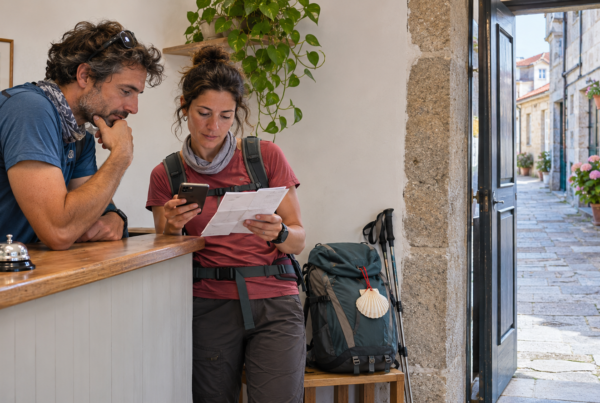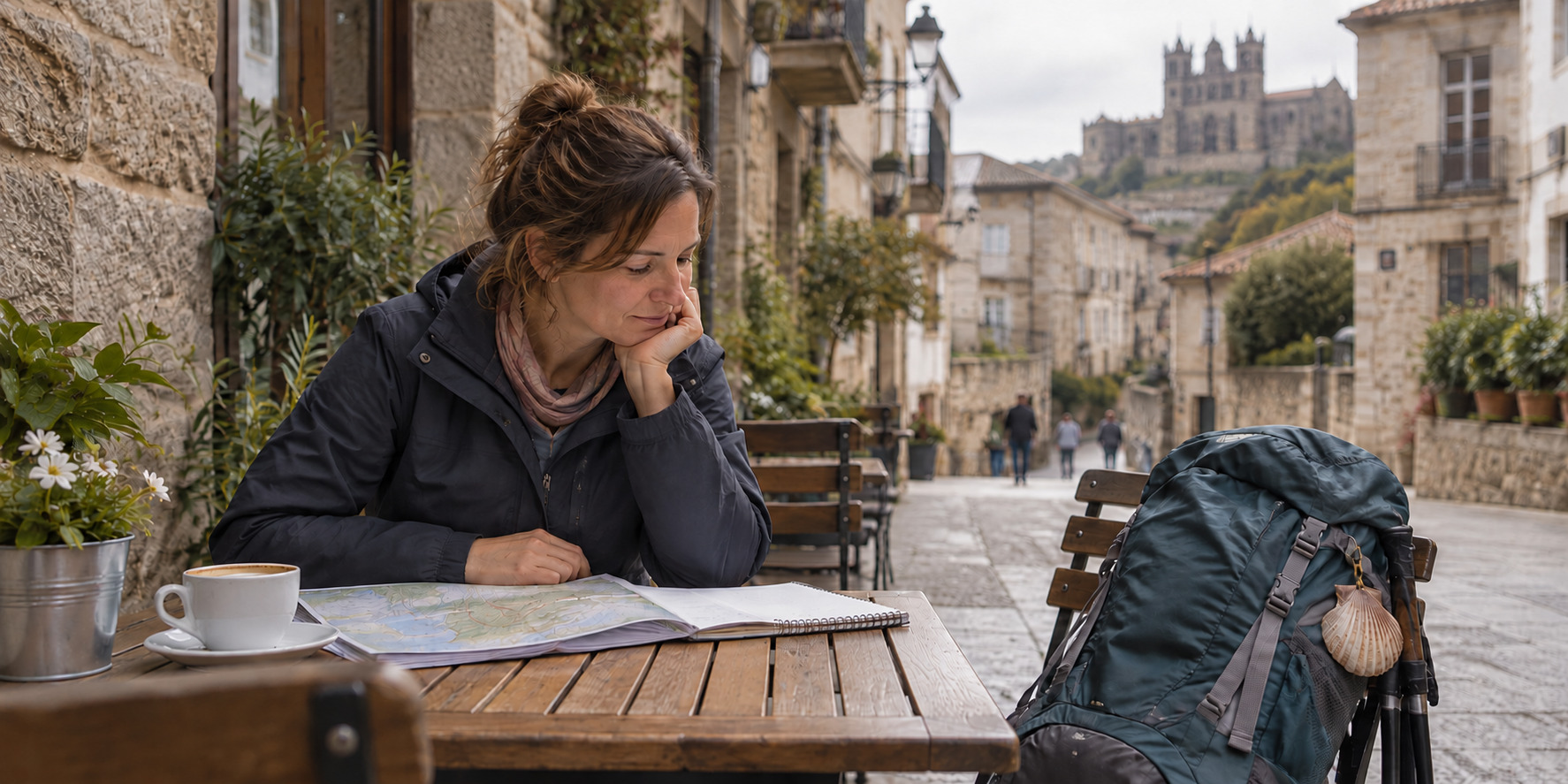
Choose Vigo if you want a shorter opening sequence before Redondela and your arrival arrangements work well there. Choose Tui if you want to begin on the inland Portuguese Way and allow time for the opening stages through O Porriño. For a first Camino, that difference in walking days is more useful than trying to name an overall winner.
The Vigo or Tui Camino decision mainly changes the beginning of your walk. The routes meet at Redondela, so compare the days before that meeting point, then build the onward journey to Santiago around your own walking pace.
Key takeaways
- Vigo starts you on the Portuguese Coastal Way; Tui starts you on the inland Portuguese Way, often called the Central route.
- The reference sequence is Vigo–Redondela, or Tui–O Porriño–Redondela. Following those stage divisions gives Tui one additional opening walking day.
- A Vigo start does not give you a separate oceanfront route all the way to Santiago.
- Count arrival, walking and departure days separately, especially when travelling from the United States.
- If the Compostela matters to you, verify your exact starting point, recognized route and credential requirements before booking.
Vigo or Tui: which start fits your priorities?
| Your priority | Start to consider | Planning consequence |
|---|---|---|
| Fewer opening stages before Redondela | Vigo | Compare Vigo–Redondela with the two reference stages from Tui. |
| An inland beginning through Tui and O Porriño | Tui | Allow time for both opening stages rather than combining them by default. |
| More flexibility within a fixed holiday | Vigo, if the arrival chain works | A day saved at the beginning could become an extra overnight later. |
| A particular atmosphere for your first night | Either, after choosing the actual accommodation | Compare the neighbourhood, arrival time and walk to your starting point. |
| Obtaining the Compostela | Check the exact itinerary for either | A city name or an approximate distance is not an eligibility check. |
These are planning recommendations, not a judgement about which route you can physically complete. Test the distances against walks you have already done, including consecutive days.
What changes in the first walking days?
The Xunta’s official stage pages list Vigo to Redondela at 16.3 km, about 10.1 miles. From Tui, the reference stages are Tui to O Porriño at 18.1 km, about 11.2 miles, followed by O Porriño to Redondela at 16.4 km, about 10.2 miles.
Use these as reference-stage distances. Your accommodation addresses, chosen alignment and any current diversions can change the walk. They are not measurements from every hotel door.
The practical difference is the sequence: one reference day before Redondela from Vigo, two from Tui. Combining the two Tui stages would mean roughly 34.5 km, or 21.4 miles, before adding any accommodation detours. Do not treat that as the automatic way to fit Tui into a shorter holiday.
Vigo’s Coastal route name also needs context. The official description takes the route out through Teis and onward to Redondela, where it joins the inland route. Choose it for that beginning rather than expecting beach walking every day to Santiago.
How many walking days should you allow?
A useful planning exercise is to compare five walking days from Vigo with six from Tui, using the same onward overnight stops. These are example allocations, not required itineraries or a promise that each day will suit you.
| Walking day | Example from Vigo | Example from Tui |
|---|---|---|
| 1 | Vigo to Redondela | Tui to O Porriño |
| 2 | Redondela to Pontevedra | O Porriño to Redondela |
| 3 | Pontevedra to Caldas de Reis | Redondela to Pontevedra |
| 4 | Caldas de Reis to Padrón | Pontevedra to Caldas de Reis |
| 5 | Padrón to Santiago | Caldas de Reis to Padrón |
| 6 | Available for a different split or extra night if your holiday allows | Padrón to Santiago |
The shorter overall walk does not shorten every day. Both examples still include Padrón to Santiago, which the Xunta lists at 25.2 km, about 15.7 miles. If that day is too long for your plan, investigate another overnight split and add the time it needs.
Starting in Vigo can therefore give a six-day walking budget more flexibility. Starting in Tui can suit someone who wants its opening section and has time for it. Compare the longest day in each proposed itinerary, not just the number of days printed above it.
Use our Camino walking-time guide to turn one proposed stage into a full day, including breaks and arrival at your accommodation.
How should you compare arrival logistics?
Start with two complete journeys: your arrival airport or station to your intended bed in Vigo, and the equivalent journey to your intended bed in Tui. Compare the connections for the actual day of the week and arrival time.
Include the less obvious parts: getting out of the airport, reaching the correct departure stop, waiting between services and walking to the accommodation. A cheaper flight can lose its advantage if the remaining connection requires a private transfer or another night.
This guide does not publish a verified current airport-to-start timetable. Confirm services, fares and booking conditions with the transport operator before paying. An airport transfer to Vigo and a connection onward to Tui are separate arrangements; do not assume one ticket or vehicle covers both.
If you are travelling from the United States, separate the outbound travel date, local arrival date, first walking day, arrival in Santiago and journey home. Five walking days do not make a five-day international trip. Leave room for the first night and your departure arrangements rather than relying on a full stage immediately after a long flight.
Can you qualify for the Compostela from either start?
If you want the Compostela, check the itinerary before choosing accommodation or accepting a package described simply as the last 100 km. This article does not certify every starting address in either city.
The Pilgrim Office’s current requirements include at least 100 continuous kilometres on foot on the same recognized route to Santiago, including the final stage into the Cathedral. The Office also sets religious or spiritual conditions and credential requirements. Its detailed conditions should be read in full.
For the minimum-distance walk, the Office specifies stamps at the start and end of each stage, with dates. Check its instructions for your own journey, and ask the Office before booking if you have doubts about your starting point, route continuity or a proposed transport section.
A route app’s approximate total is useful for planning effort. It does not replace the Office’s requirements or confirm eligibility. Keep the chosen starting point and walking line consistent across your map, itinerary and credential record.
What should you book first?
- Choose the opening you want: Vigo–Redondela or Tui–O Porriño–Redondela.
- Write down the full holiday dates, keeping travel days separate from walking days.
- Check the exact starting point and the Compostela conditions if the certificate matters to you.
- Measure each proposed day between the actual overnight addresses, including the final walk into Santiago.
- Confirm arrival transport and the first night’s check-in arrangements.
- Check the remaining accommodation and any luggage-transfer collection and delivery addresses before paying.
You do not need to decide every café stop before departure. You do need an opening plan that still works if your arrival takes longer than expected, plus realistic distances for the days that follow.
Choose the beginning, then plan the shared route
If you are undecided and have a tight walking budget, test the Vigo itinerary first: its shorter opening sequence may leave more room to adjust later stages. If Tui’s inland beginning is part of the journey you want, give it the extra opening day rather than forcing a long first stage.
Once that choice is made, use our Redondela to Pontevedra guide to plan the first section shared by both options.