The Portuguese Coastal Camino in 2026 looks easier to plan in one important way, and less forgiving in another. March did not bring a dramatic route change or a new official variant. What it did bring was something more useful for real trip planning: clearer proof that the route is maturing fast.
A new baggage transfer option now starts in Porto. The route kept attracting strong international demand. And the Coastal Way kept gaining visibility as a route people actively choose, not just a scenic alternative.
For pilgrims, especially those flying in from the United States, that combination matters. Better logistics usually make a route more accessible. More accessible routes usually get busier. And busier routes reward earlier decisions on where to start, how much flexibility to keep, and how much comfort to pay for.
Key takeaways
- The biggest March 2026 shift was practical, not symbolic. Baggage transfer from Porto became available on the Portuguese Camino, including the Coastal option.
- The Coastal Way continued to post strong demand signals, with a high share of international pilgrims.
- The route is not becoming impossible to walk without heavy planning, but it is becoming less ideal for a fully improvised trip in the most popular stretches.
- If you want the scenic Porto start with maximum flexibility, plan your first nights earlier than you might have a year or two ago.
- If you are considering a shorter start from Vigo or Tui, demand patterns suggest you are far from the only one.
What actually changed in March 2026
The useful part of March was not one headline. It was three signals pointing in the same direction.
| Signal | What happened | Why it matters for planning |
| Easier logistics | Correos expanded its Paq Mochila baggage transfer service so pilgrims can arrange luggage transport from Porto, including the Coastal route. | The route becomes more accessible to people who want less weight on their back, slower recovery days, or a softer first Camino. |
| Stronger demand | March data showed continued growth and a high international share on the Coastal route. | More demand means less room for last minute decisions in popular stages and accommodation types. |
| More international positioning | Baiona used the route as part of its tourism push and framed 2026 around the 10th anniversary of the route’s official recognition. | The route is no longer niche. It is being actively marketed and reinforced as a mature international product. |
That does not mean the Portuguese Coastal Camino suddenly turned into the Camino Francés in peak summer. It does mean the route is moving further away from the old idea of a quiet insider option that you can always improvise with zero friction.
What this means if you want to start from Porto
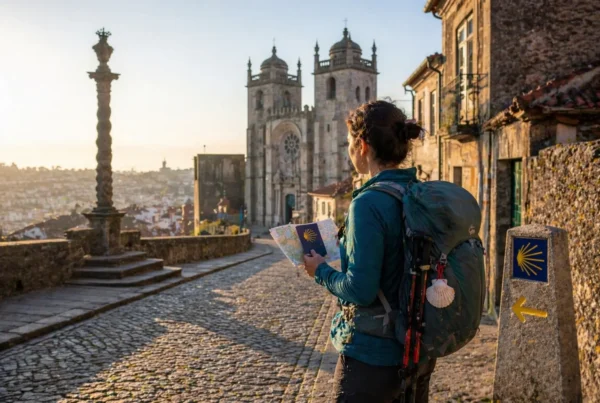
Porto remains one of the most attractive starts for international pilgrims. It is easy to reach, memorable, and gives the trip a stronger sense of journey from day one.
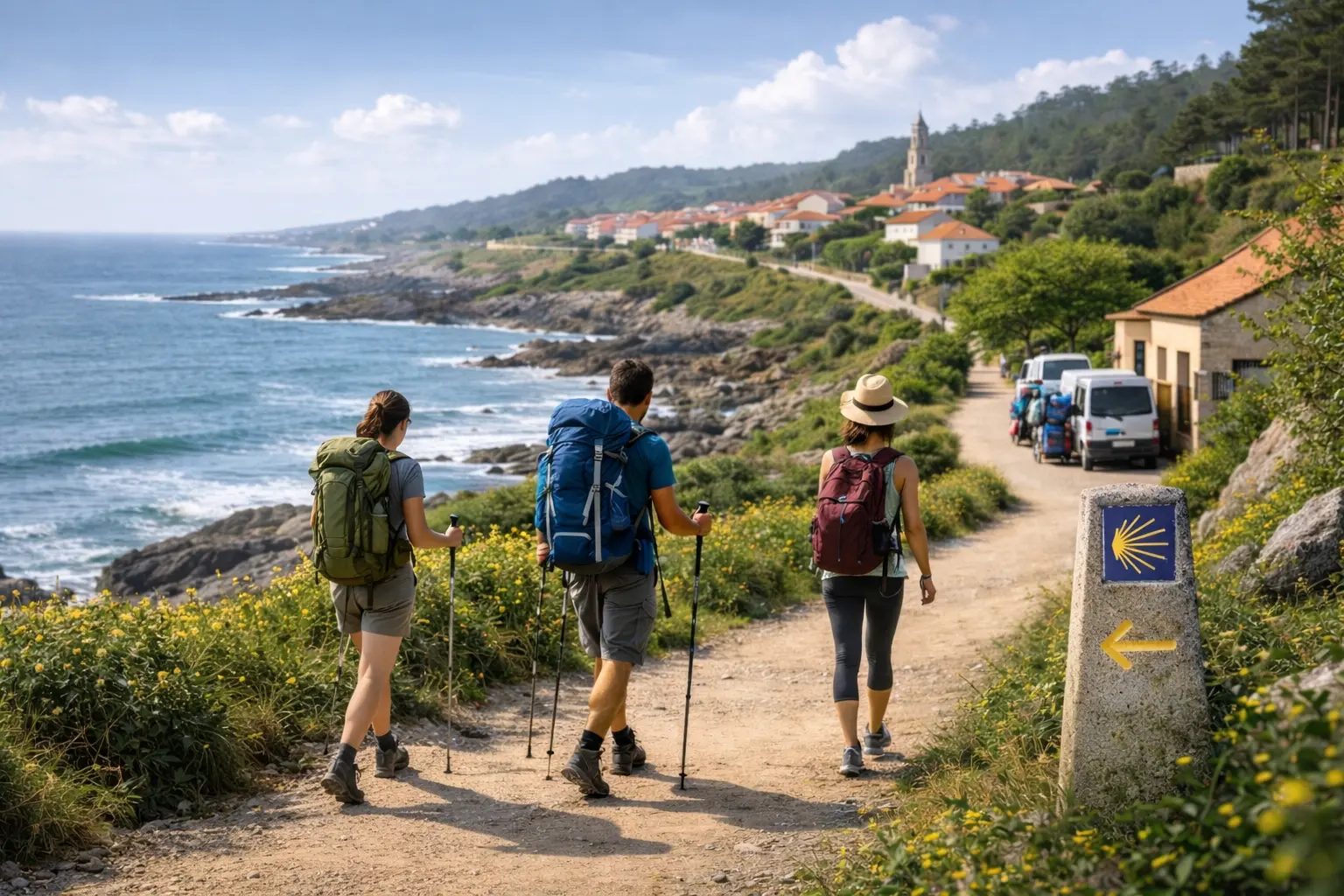
March made Porto even more attractive for one specific type of pilgrim: the person who wants the full Coastal experience without carrying a heavier pack every day. That is where baggage transfer from Porto changes behavior. It lowers the barrier to entry for older walkers, comfort first travelers, mixed ability pairs, and people who want to preserve energy for a longer trip.
That is good news. It is also exactly the kind of improvement that can increase demand on the same early stages where many pilgrims already want to stop.
So if Porto is your plan, the smartest move is not panic booking your entire Camino months in advance. It is being more deliberate in the areas where flexibility matters least.
A sensible approach is:
- lock in your arrival and first nights
- decide early whether you will carry your pack or use transfer services
- keep one backup stage option in mind if your ideal stop is full
- know your comfort threshold before the trip starts
If you are still shaping your spend, read our guide to walking the Portuguese Coastal Camino on any budget. If accommodation is your biggest concern, start with where to stay on the Portuguese Coastal Camino.
What this means if you are considering Vigo or another shorter start
One of the clearest March signals was how strong shorter starting points remain.
That matters for two reasons. First, it confirms that many pilgrims are optimizing around time, not only around route romance. Second, it means the last 100 kilometer logic is still shaping real demand.
For many US travelers, that is the real decision point. Not “Which Camino is best?” but “How much time do I actually have, and where should I start to get the experience I want?”
If you have around one week, a shorter start can be the difference between a rushed trip and a coherent one. But popularity comes with tradeoffs. The more a start point becomes known as a practical shortcut, the less likely you are to have the route to yourself.
That does not make Vigo or similar starts a bad choice. It just means they should be chosen intentionally.
And if you are building a plan around Compostela eligibility, stamp collection, and credential use, review our Camino credential guide before you finalize the route.
How to plan without overcomplicating the trip
The best response to a busier Coastal Camino is not over engineering. It is removing avoidable uncertainty.
A practical planning checklist
Choose your trip style early
Are you doing this as a light adventure, a comfort first walking holiday, or a more traditional pilgrim experience? That one decision affects accommodation, baggage strategy, daily mileage, and budget.
Book the parts that create the most stress if they go wrong
For most travelers, that means the first nights and any stop where the alternatives are inconvenient.
Do not confuse trail experience with booking experience
A route can still feel beautiful, open, and reflective during the day, while becoming more competitive at check in time.
Carry only the flexibility you will actually use
Some pilgrims love total spontaneity. Others say they do, then spend the late afternoon searching for beds on their phone. Be honest about which one you are.
Build around energy, not only distance
A more accessible route encourages more first time walkers. That is helpful, but it also means not everyone on the route is calibrated to the same pace or comfort level. Plan your days around how you want to feel, not around what looks efficient on paper.
What has not changed
This is just as important as what has changed.
March 2026 did not bring evidence of a major route overhaul, a dramatic operational disruption, or a new rule that suddenly changes how the Coastal Camino works. The bigger story is route maturity.
The Portuguese Coastal Camino is becoming:
- easier to access
- easier to market
- easier to choose
- harder to treat as an under the radar option
That is usually what growth looks like before a route starts feeling noticeably more competitive to plan.
So, is it getting too busy?
Not too busy to do well.
Too busy to assume you can wing every decision, especially if you want popular stage endings, higher comfort, or a Porto start in a busy window. That is the better way to read the March signals.
For many pilgrims, this is still an excellent moment to choose the Coastal route. Logistics are better. The route has stronger support around it. There is more public proof that it is a serious option, especially for international walkers.
The tradeoff is simple. As the route becomes easier to choose, it also becomes less forgiving of vague planning.
Your best next step
Do not start by asking whether the route is crowded in the abstract. Start by asking what kind of trip you want.
If you want the full Porto to Santiago experience, tighten your first stage planning and accommodation strategy.
If you want a shorter route with Compostela eligibility, choose your start point with clear expectations.
If you want comfort without overpacking, decide now whether baggage transfer is part of the trip design rather than a last minute rescue.
Then use that choice to shape the next three planning decisions that matter most: where to sleep, what to spend, and how to handle your credential.