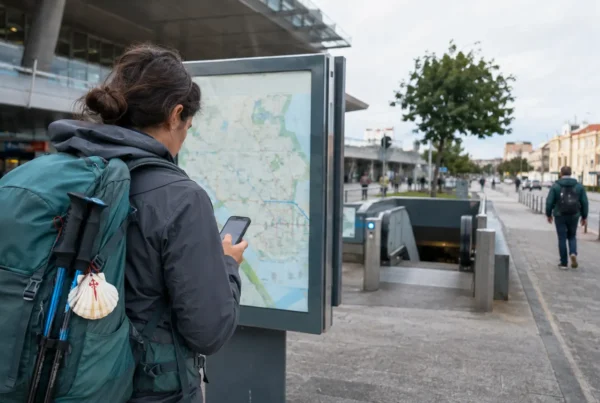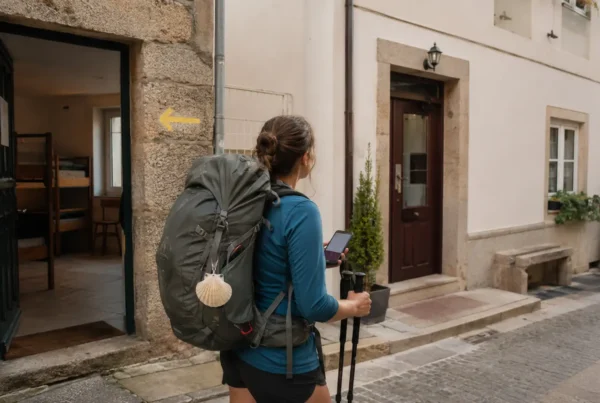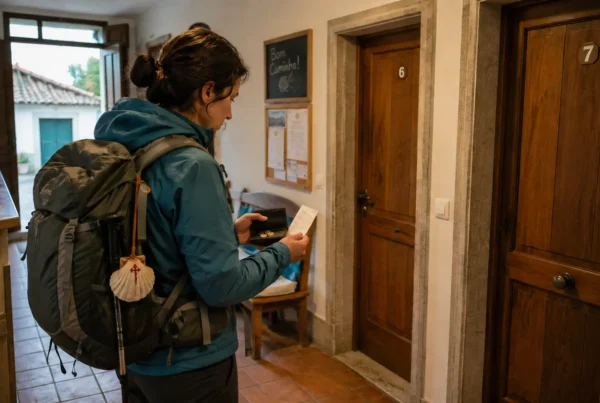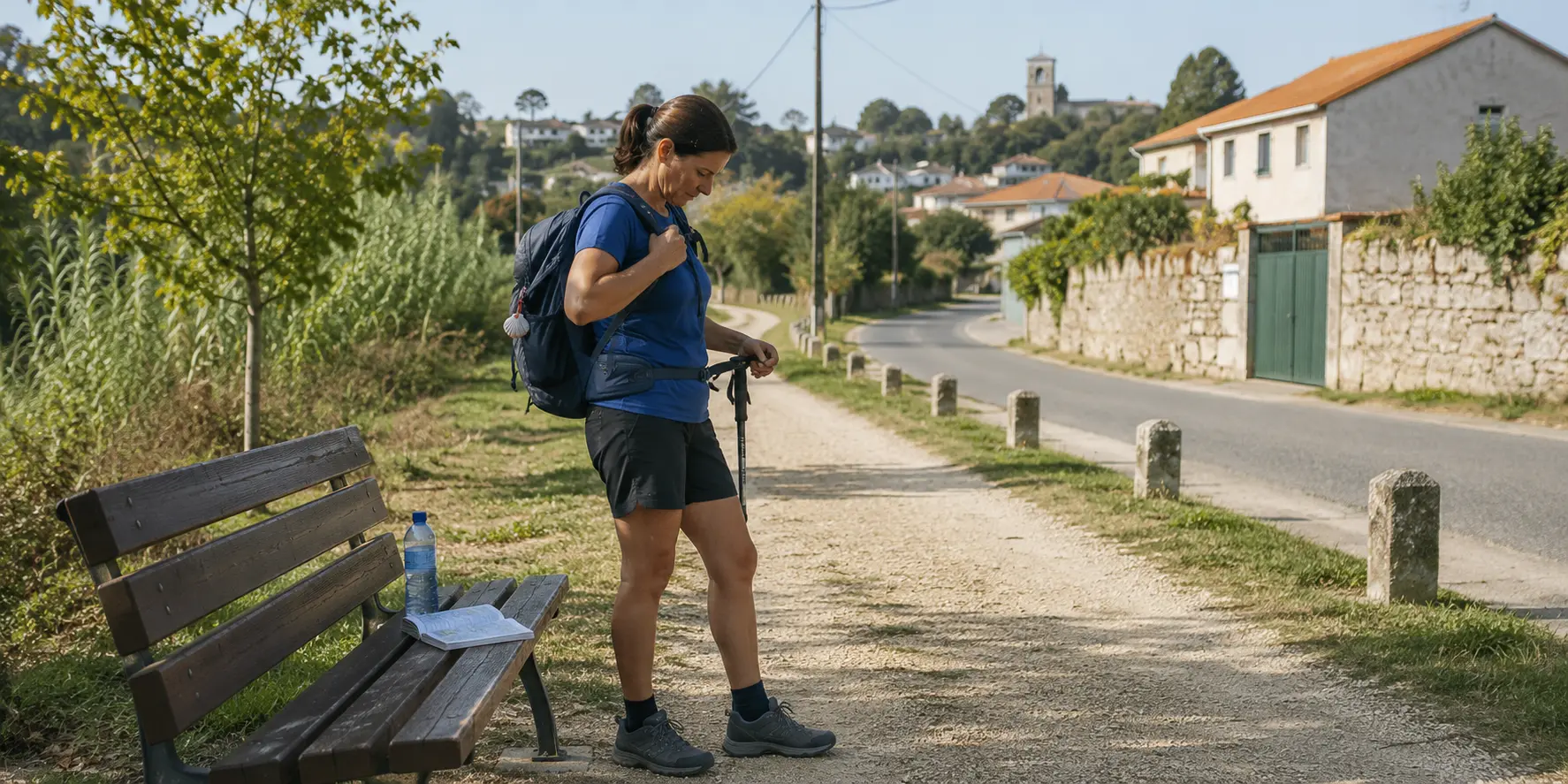
A useful Portuguese Coastal Camino training plan should prepare you to walk again tomorrow, not just prove that you can complete one impressive hike today. For a first-time pilgrim, regular walking, a few back-to-back training days and proper testing of footwear and luggage matter more than chasing an arbitrary weekly mileage target.
Twelve weeks gives you plenty of room to build gradually, but it is not a mandatory minimum. If you already walk regularly, eight weeks may be a reasonable preparation window. If you only have four weeks, the priority changes: build consistency, test your real Camino setup and avoid trying to compress three months of walking into a few weekends.
This is a general preparation framework, not an individual fitness or medical programme. If you are returning to activity after a long break, managing an injury or health condition, or are unsure whether a particular level of walking is appropriate for you, get advice from a qualified healthcare professional.
Key takeaways
- A 12-week Camino training plan gives you time to increase walking gradually, but you do not need exactly 12 weeks to prepare.
- Your current walking baseline matters more than age or a generic fitness label when deciding where to start.
- Back-to-back walks are valuable because the Camino asks you to walk on consecutive days, not because you need to recreate the entire route before leaving home.
- Train in the shoes, socks and backpack or daypack you actually expect to use.
- If you plan to use baggage transfer, do not spend weeks training with a heavy backpack that you will not carry on the Camino.
- If your preparation window is short, changing your stage plan or luggage strategy can be more sensible than forcing a rapid increase in training.
How much training do you need for the Portuguese Coastal Camino?
There is no single number of weeks that makes somebody ready for the Camino. The better question is how different your current routine is from several consecutive days of walking.
Someone who already walks or hikes for a few hours most weekends starts from a different position than someone whose normal week contains very little walking. Both can use the same training principles, but they should not start with the same volume.
| Your current baseline | Useful preparation window | Main priority | Watch out for |
|---|---|---|---|
| Little regular walking | About 10 to 12 weeks or more | Build a consistent walking habit before adding long days | Large jumps in distance because departure is getting closer |
| Regular short walks and general activity | About 8 to 12 weeks | Extend time on your feet and introduce consecutive walking days | Assuming general fitness automatically prepares you for repeated long walks |
| Regular longer walks or hiking | About 4 to 8 weeks may provide a useful Camino-specific block | Test back-to-back days, footwear and your actual luggage setup | Adding unnecessary mileage simply because a generic plan tells you to |
These are planning ranges, not fitness guarantees. If your first weeks feel like a major change from your normal routine, reduce or repeat them rather than treating the calendar as a deadline.
What should Camino training actually prepare you for?
The main challenge to simulate is repetition.
You do not have to walk the equivalent of your entire future Camino itinerary before departure. A more useful preparation test is whether you can complete a substantial walk, recover from it, put the same shoes back on the next morning and walk again.
Your preparation should gradually cover four areas:
- Regular walking: build a routine instead of relying on occasional very long hikes.
- Time on your feet: make some sessions progressively longer so that you learn how your feet, footwear and gear feel after several hours.
- Consecutive days: introduce back-to-back walks once regular walking already feels manageable.
- Real equipment: test the footwear, socks, backpack, daypack and walking poles you plan to use.
Strength, cycling, swimming or other exercise can complement the plan if they are already part of your routine, but they do not replace the specific experience of walking for several hours and doing it again the next day.
A realistic 12-week Camino training plan
This 12-week Camino training plan uses time rather than fixed kilometres. Walking pace varies considerably, so a rigid distance can make the same plan unnecessarily demanding for one person and too easy for another.
The durations below are examples for adapting your preparation, not medical targets. Start below them if they represent a large jump from what you currently do.
| Weeks | Walking structure | Key session | Preparation focus |
|---|---|---|---|
| 1 to 2 | About 3 walks per week | One 45 to 75 minute walk | Create consistency and start using likely Camino footwear |
| 3 to 4 | About 3 to 4 walks per week | One 75 to 120 minute walk | Extend time on your feet and test socks, shoes and small gear choices |
| 5 to 6 | About 4 walks per week | One 2 to 2.5 hour walk, with an easier walk the following day when appropriate | Introduce consecutive walking and start testing your planned pack |
| 7 to 8 | About 4 walks per week | A weekend with roughly 2.5 to 3 hours one day and 60 to 90 minutes the next | Learn how your footwear and luggage setup feel on day two |
| 9 to 10 | About 4 walks per week | A longer back-to-back weekend, such as 3 to 4 hours followed by about 2 hours | Use the Camino setup you genuinely expect to carry |
| 11 to 12 | Gradually reduce from your peak weeks | Shorter familiar walks rather than another major test | Resolve gear decisions and avoid last-minute training experiments |
You do not need to progress every week. If one level already feels like a significant increase, repeating it can make more sense than moving automatically to the next row.
You can also shorten individual sessions. The structure matters more than matching every suggested duration.
Why back-to-back walks matter more than one huge training day
A common training mistake is to build towards one very long Saturday walk and treat completing it as proof that the Camino will be manageable.
That tests only part of the problem.
On the Camino, the question is what happens after that walk. You will normally wake up, get dressed, put your shoes on again and continue towards the next stop.
Back-to-back training lets you test that routine without needing to reproduce full Camino stages. The second walk can be shorter and easier. Its purpose is to show you how your feet, equipment and general energy feel after the previous day.
Introduce consecutive walks after you have established regular weekly walking. They should not be your first major training session.
How should you train if you only have eight weeks?
Do not try to squeeze all 12 weeks into eight.
If you already walk regularly, use the first part of the eight-week window to extend your longer walk, then spend the middle weeks introducing back-to-back sessions and gear testing. Keep the final week easier rather than using it for your biggest training weekend.
If your normal routine contains little walking, start with the foundation work instead. It is better to arrive without completing every theoretical training milestone than to force an aggressive schedule simply because your departure date is fixed.
Your Camino itinerary can also respond to your preparation. Shorter opening stages, a more flexible schedule or a different luggage strategy may reduce the gap between your training and the trip you are actually planning.
What if you only have four weeks to train for the Camino?
Four weeks is enough time to make useful preparation decisions. It is not a reason to suddenly start doing extreme distances.
Use those weeks to answer practical questions:
- Can you establish several walking sessions each week?
- Can you extend one weekly walk without making every session hard?
- Can you complete at least one back-to-back walking weekend after you have built some consistency?
- Have you tested the exact shoes and socks you intend to bring?
- Have you walked with the backpack or daypack you will actually carry?
- Does your planned first section of the Camino still look sensible after those tests?
If the answer to the final question changes, adjust the trip rather than trying to win a race against the calendar.
Train with your actual footwear, not your ideal footwear
Your long training walks are partly equipment tests.
Use the shoes and socks you expect to wear on the Camino early enough that you can identify fit or comfort problems before departure. Do not save new footwear for the final week.
The same applies to insoles, poles and other equipment that affects the way you walk. A three-hour training walk is a much more useful place to discover that something feels wrong than the first stage of your Camino.
You do not need to wear Camino gear on every short walk. The important sessions are the longer walks and the back-to-back weekends, where small equipment problems have more time to become obvious.
Train with the pack you will actually carry
A universal backpack percentage based on body weight is not necessary for this plan. Your useful training load is the load you genuinely expect to carry.
If you plan to carry everything from Porto to Santiago, gradually introduce the backpack you intend to use and work towards testing your real packing list.
If you have not chosen it yet, review our guide to choosing a backpack for the Portuguese Coastal Camino before your final pack-testing walks.
Do not deliberately add extra weight just to make a training session harder. The objective is to test your Camino setup, not create an artificial challenge.
If you plan to use baggage transfer
Your preparation should look different if your main luggage will move between accommodations.
Train with the daypack and essentials you expect to carry while walking. There is little practical value in adapting to a heavy full backpack if that is not how you intend to walk the route.
If you have not made the decision yet, compare the practical implications of baggage transfer from Porto on the Portuguese Coastal Camino before you decide what weight to use during your later training sessions.
How much recovery should you build into the plan?
Recovery is part of the training schedule. Do not treat every free day as an opportunity to add more distance.
After a longer or back-to-back weekend, the following sessions can be shorter and easier. If you miss training because of work, travel or another interruption, you do not need to compensate by doubling the next session.
Use the plan as a framework that can move backwards as well as forwards. Repeating a manageable week is preferable to forcing a progression because the table says another week has started.
This guide cannot tell you whether pain or another symptom is safe to train through. If symptoms make you uncertain about continuing or increasing activity, get individual advice from a qualified healthcare professional rather than using a generic Camino plan as a diagnosis.
Five common Camino training mistakes
1. Starting the longest walks too early
If your usual walk is short, jumping immediately to several hours does not give you much information beyond the fact that the jump was large. Build regularity first.
2. Training for one heroic day
Your Camino involves repeated walking. Include some consecutive walking days instead of concentrating all preparation into a single weekly endurance test.
3. Testing important gear too late
Shoes, socks, packs and poles need real walking time. A final weekend test leaves little room to change something that does not work for you.
4. Training with the wrong luggage strategy
A pilgrim carrying a full pack and a pilgrim using baggage transfer are preparing for different loads. Decide which trip you are planning before the later training weeks.
5. Treating the plan as a pass or fail test
Finishing every line of a training table does not guarantee that you will complete the Camino, and missing a session does not automatically mean that your trip will fail. Use what you learn in training to make better decisions about stages, luggage and pacing.
How do you know whether your preparation is useful?
Do not judge the plan only by total kilometres.
By the later weeks, you should have useful answers to these questions:
- Which shoes and socks will you use?
- Have you worn them for several hours at a time?
- Have you walked on consecutive days?
- Do you know what you will carry each day?
- Have you tested that load on a longer walk?
- Do you know how your normal walking pace changes after a few hours?
- Does your planned Camino itinerary still make sense after your training?
That information is more useful than completing a predetermined mileage total without learning anything about your actual Camino setup.
FAQ
Do I really need a 12-week Camino training plan?
No. Twelve weeks gives you a useful amount of time to build gradually, especially if you do not already walk regularly. Someone with an established walking or hiking routine may need less Camino-specific preparation. Do not use the number of weeks as a guarantee of readiness.
Can I train for the Camino de Santiago in four weeks?
You can make meaningful preparation in four weeks, particularly if you are already active. Focus on consistent walking, one or more gear tests and some experience of consecutive walking rather than trying to reproduce a 12-week plan at three times the speed. If you are starting from very little activity, consider whether your itinerary should also change.
How far should I be able to walk before starting the Camino?
There is no universal test distance. Try to build towards a substantial walk that reflects the kind of time you expect to spend on your feet, then test a second walk the following day. You do not have to reproduce your longest planned stage before departure.
Should I walk with my full backpack during training?
Only if you expect to carry that backpack on the Camino. Build towards your real planned load rather than using an arbitrary weight. If you will use baggage transfer, train primarily with the daypack you expect to carry.
Is strength training enough if I am already fit?
Strength and other forms of exercise can support your preparation, but they do not tell you how your feet, footwear and pack will respond to several hours of walking on consecutive days. Include actual walking in a Camino-specific plan.
Can I do Camino training on a treadmill?
A treadmill can help you maintain regular walking when outdoor sessions are inconvenient. Before departure, however, include outdoor sessions with your actual footwear and luggage setup so that your preparation is not limited to a controlled indoor surface.
Your next step
Start with your calendar rather than a mileage target. Count how many weeks you have, look at how much you genuinely walk now and schedule a realistic first two weeks.
Then decide whether you will carry your full backpack or use luggage transfer, because that choice changes how you should approach your later training walks.
If your preparation window, luggage choice and stage plan are still disconnected, review our Portuguese Coastal Camino logistics guide before locking the rest of your trip.
The goal of training is not to complete the Camino before you arrive in Portugal. It is to reach your start with fewer unanswered questions about walking repeatedly, your equipment and the itinerary you have chosen.