Camino de Santiago pilgrims planning or already walking in early October face a clear set of updates that still matter right now. September remains the historic peak flow period, and brand‑new Compostela rules 2025 are now in effect, including two stamps per day for everyone and added flexibility on how you complete your final kilometers. Below you will find a practical lede with what changed and why, a numbers snapshot, safety guidance for Portugal, a culture calendar, a route spotlight beyond the usual suspects, and a hands‑on service section that shows exactly how to secure your Compostela this fall.
What changed in September 2025 and why it matters now
The single biggest shift is administrative but it reshapes crowd patterns. Pilgrims can now complete a continuous 100 km on one recognized route, then add the final stretch into Santiago that may be along a different recognized route. Combined with the universal two stamps per day requirement, this change aims to ease the extreme concentration between Sarria and Santiago during high season. With September just finished and early October still busy, the update gives walkers more options to distribute starts and avoid bottlenecks without jeopardizing the certificate.
What this looks like in practice
- If you walk 100 km continuously on the Portuguese Coastal Way and then join the final approach via the Central or English Way, your journey can still qualify.
- Stamp rules are the same for all pilgrims, regardless of route or mode of travel: collect at least two stamps per day on the qualifying segment.
- The intent is to spread demand across towns and albergues outside the usual last‑100 hubs, while maintaining verification integrity for the Compostela.
Key Update: Compostela rules 2025 explained
The certificate office now enforces a streamlined standard with two pillars that every pilgrim should internalize.
Pillar 1: Two stamps per day
All pilgrims must present two legible stamps per day on the qualifying kilometers. Stamps can be obtained at parish churches, albergues, hostels, cafés, town halls, museums, and recognized information points. The rule helps verify continuous progress and discourages leapfrogging during the last stretch.
Pro tips
- Get one morning stamp as you leave and another late afternoon or at lodging. When in doubt, add a third.
- Use contrasting ink colors where possible and keep stamps away from page edges to avoid smudging.
- Ask the stamp officer to include the date and place name clearly. If the stamp is faint, request a second impression.
Pillar 2: Flexible final approach
You must complete 100 km on foot or 200 km by bike continuously on a recognized route. After that, you may tack on the final approach to Santiago that can be on a different recognized route. The path you choose for the closing section should still be an established Camino with waymarking and services, not ad‑hoc shortcuts.
Why this matters now
- September traditionally overloads the Sarria corridor. The new flexibility empowers pilgrims to start from more diverse points and switch thoughtfully near the end, reducing stress on a single spine of albergues.
- It encourages discovery of lesser‑known towns, spreading economic benefits across communities that welcome pilgrims with the same warmth yet often see fewer visitors.
By the Numbers: 2025 trajectory and the September surge
- 2025 is on track to surpass 570,000 pilgrims receiving the Compostela, based on year‑to‑date patterns and September projections.
- September remains the busiest month, thanks to milder temperatures after summer heat, extended daylight, and European holiday calendars.
- Expect pronounced weekend compressions in the last 120 km of the most popular routes. Midweek starts and early‑day departures continue to offer the best margins for bed security.
Safety Watch in Portugal: wildfire alerts and how to adapt
Portugal declared temporary “State of Alert” periods this summer when wildfire risk spiked, and some rural or forest sections of Camino paths were temporarily closed under those restrictions. Early October can still bring hot, dry days inland and along certain coastal woodlands, so vigilance is essential.
What to do if an alert is declared
- Pause a stage rather than forcing your way through a closed forest section. Safety and compliance come first.
- Seek shelter in towns or hostels until authorities lift the restriction. Many albergues will flex check‑in times and advise alternative logistics during closure windows.
- Adjust your plan by using coastal promenades or official detours that skirt risk zones. Always follow local signage and civil protection guidance.
Preparation checklist for fire‑risk days
- Start earlier, carry extra water, and wear a brimmed hat. Heat exposure and dry winds reduce margin for error.
- Download offline maps and keep emergency contacts handy in case cell coverage drops in rural pockets.
- Never light stoves or campfires in prohibited periods. Dispose of cigarette butts safely and avoid walking through smoky areas.
Culture and Events: Leça do Balio and Xacobeo 2025
September was not only about crowds and kilometers. It was also a rich culture month, and early October continues the cultural buzz.
Leça do Balio historical reenactment
From September 9 to 14, the Monastery of Leça do Balio, just north of Porto on the Portuguese routes, hosted a living‑history festival titled “Os Hospitalários no Caminho.” Expect period costumes, artisan stalls, music, and dramatizations that celebrate the medieval guardians of the Camino. If you plan an early‑September start next year, pencil it in; for early October, check municipal listings for concerts and fairs aligned with Xacobeo programming.
Xacobeo 2025 concert calendar
Xacobeo programming keeps Galicia’s stages full across the autumn. Even when you are in the last push to Obradoiro, an evening concert or local festival can add a memorable coda. Ask at albergues for up‑to‑date posters and look for municipal listings posted at tourist offices in towns like Pontevedra and Padrón.
Route Spotlight: Geira e Arrieiros turns heads
The Caminho da Geira e dos Arrieiros passed the symbolic mark of 600 Compostelas as of September 11, with walkers from 47 nationalities and a notable share starting in Braga. This path blends Roman roads, mountain passes, and wine‑country villages. It remains quieter than coastal or central alternatives, yet services have expanded steadily.
Why consider Geira e Arrieiros now
- The new Compostela rules reward continuous distance on recognized routes, and this one offers variety without the crush.
- Elevation profiles are more athletic than the coast, which appeals to trekkers seeking a wilder feel. Plan conservative stage lengths and confirm bed availability in small villages.
Camino de Santiago route choices for early October travelers
Choosing the right gateway is the single best lever to control your experience during the peak wave. Here are thoughtful starts that pair well with the updated rules.
Portuguese Coastal Way
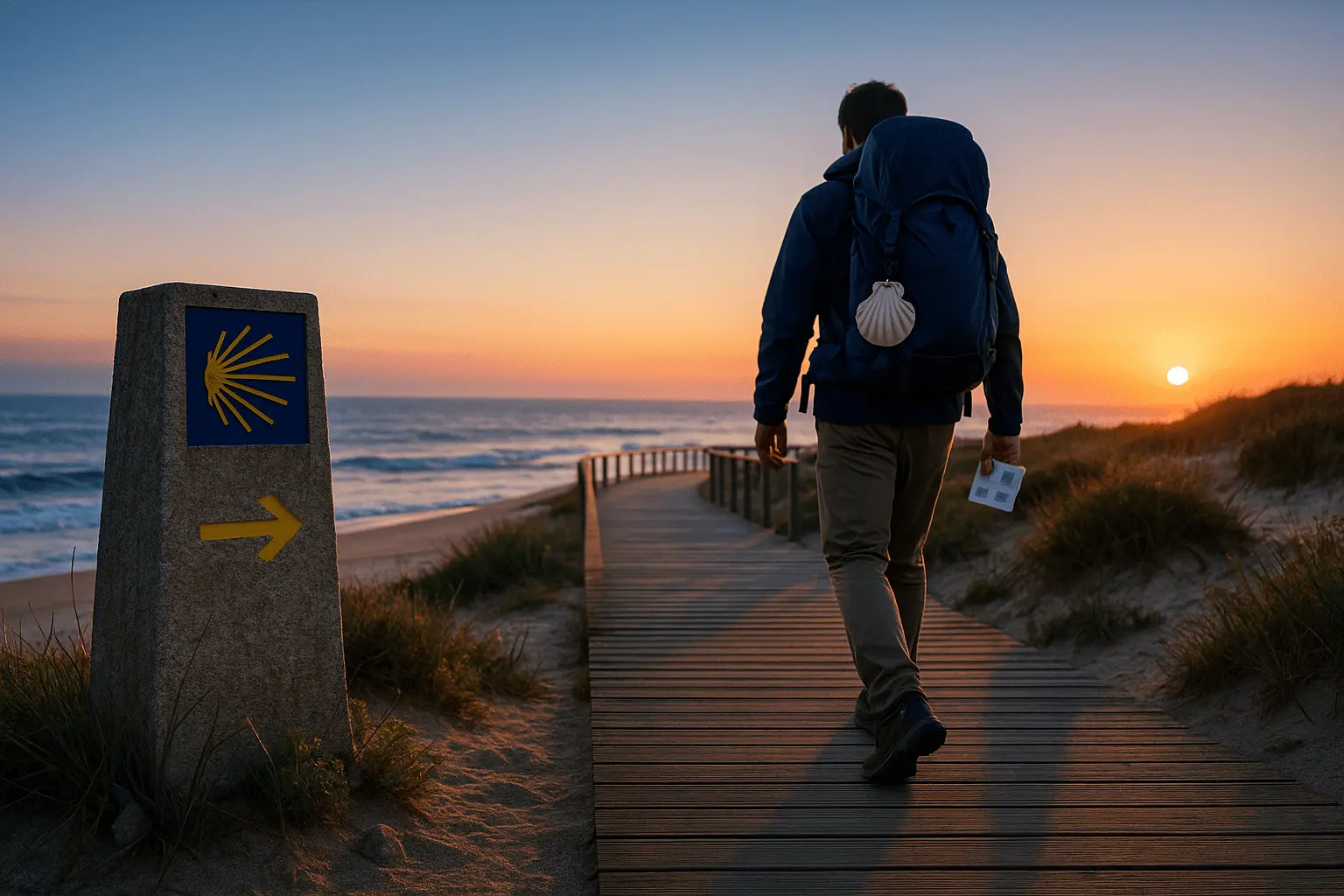
Love sea air, boardwalks, and photogenic sunsets. If you want inspiration for your camera days between Porto and the border, save this guide to the best photo spots on the Portuguese Coastal Camino for planning and detours: photo spots on the Portuguese Coastal Camino
Portuguese Way from Tui
If your schedule favors a one‑week walk, the Tui starting point guide for 2025 covers border logistics, bridge crossings, and how to thread the busiest segments more serenely: Tui starting point guide
Vila do Conde as a gentle first night
A shorter first day from Porto to Vila do Conde helps your legs ease into rhythm, then continues north on quiet promenades. This Vila do Conde pilgrim guide maps services, history, and where to stamp by the river: Vila do Conde pilgrim guide
Service for Readers: how to secure the Compostela, pack smart, and check alerts
This section consolidates the logistics you asked about into one actionable checklist.
How to secure the Compostela
- Credential
- Obtain your pilgrim credential before you start. Many cathedrals, confraternities, parish offices, and official associations along the routes issue it. Hostels near major starting towns usually have a stock.
- Qualifying distance
- Walk at least 100 km or cycle at least 200 km on a recognized route, all in a continuous stretch. With the 2025 update, you may then add the final approach into Santiago that can be on another recognized route.
- Two stamps per day
- Collect two stamps daily on the qualifying segment. More is fine, but fewer risks refusal. Ensure dates and place names are legible.
- Arrival in Santiago
- On arrival, follow signs to the Pilgrim Office. Queue systems may assign a number by QR code or at kiosks, then call you to the desk for verification. Keep your ID handy.
- Compostela issuance
- If your stamps and distances pass verification, you will receive the Compostela. If you also want a distance certificate, request it during processing.
What to carry in September
- Foot care kit: blister patches, tape, small scissors, antiseptic wipes, tiny tube of lubricant. September heat and sweat make prevention everything.
- Hydration and salts: one or two bottles plus electrolyte tabs for hot afternoons.
- Sun and smoke readiness: sunglasses, brimmed hat, light buff that can double as a particulate cover if smoke drifts from distant fires.
- Layers: mornings can start cool on the coast. A light shell and a breathable midlayer cover most conditions.
- Navigation backup: offline maps on your phone and a small paper map excerpt for the stage, stored in a zip bag.
- Stamp plan: keep the credential safe inside a resealable pouch. Mark likely stamp points on your map each morning.
Where to check daily alerts before setting off
- Portugal: look for civil protection notices and municipal social pages in areas you will traverse, especially if your stage includes forest parks. Albergue hosts and parish offices are reliable local amplifiers of official alerts.
- Weather: check Portuguese and Galician forecasts each evening and morning. Heat advisories, wind warnings, and sudden Atlantic fronts all influence start times and pace.
- Route associations: pilgrim associations publish detours when authorities close segments. These are excellent for discovering safe alternatives that preserve your distance plan.
Smart stage planning during peak season
- Start early, rest early: leave at first light, claim a bed before midafternoon, then explore towns without the rush.
- Alternate ferry or boardwalk variants on coastal sections to avoid single‑file crowds and enjoy better footing.
- Embrace rest days: a midweek pause in cities like Pontevedra or Viana do Castelo reduces fatigue and helps you hit festivals or markets.
- Small‑town hospitality: family‑run pensions in villages just off the main artery often have space when headline albergues fill. Call ahead if possible.
Myths vs reality
Myth: Two stamps per day means the walk is policed at every turn.
Reality: It is a verification tool, not a surveillance regime. Most stamps are friendly interactions that connect you to the Camino’s living community.
Myth: Switching routes near the end will invalidate my journey.
Reality: The 2025 update is designed to allow exactly that, as long as you complete the qualifying kilometers continuously on a recognized route.
Myth: September heat makes the Portuguese routes dangerous.
Reality: Conditions vary by microclimate. With earlier starts, hydration, and detour compliance during alerts, September remains an excellent month to walk.
FAQ
Do I need two stamps per day even if I walk more than 100 km total?
Yes. The two stamps per day rule applies to everyone on the qualifying segment, regardless of total distance.
Can I combine cycling and walking to reach 200 km?
The Pilgrim Office assesses continuity by mode. If you intend to cycle, plan for 200 km by bike. Mixing modes complicates verification and may delay issuance.
Where can I get my first stamp if I start in Porto?
Try the cathedral, main albergues, or parish offices. Many cafés along the signed path also stamp, especially near Matosinhos boardwalks.
What if a wildfire alert closes a forest stage on my route day?
Pause and consult local authorities or hosts. You can replan using coastal promenades or approved detours. Never enter a closed zone.
Does the flexible final approach mean I can drive part of the way?
No. The flexibility pertains to recognized walking or cycling routes. Motorized shortcuts do not count toward qualifying distance.
Is Geira e Arrieiros safe for solo walkers?
Yes with normal precautions. It is quieter, so book beds ahead, carry extra water on long stretches, and share your daily plan with a host.
How soon should I queue at the Pilgrim Office in September?
Arrive early in the day to manage wait times. If the digital queue is in use, secure your slot and enjoy a nearby museum or park until your number is called.
What to watch into October
Expect continued high volumes through the first half of October as calendars shift and temperatures stay favorable. The new Compostela rules 2025 will likely push more pilgrims to start on the Portuguese corridors, the English Way, and lesser‑known northern variants, distributing overnight stays and spending more widely. This is good news for villages beyond Sarria’s gravitational pull. Keep an eye on how flows redistribute across Braga, Ponte de Lima, and Valença, and consider booking first nights in advance while keeping stage lengths flexible. The Camino’s cultural fabric thrives when pilgrims spread out, linger in local markets, and swap the most direct line for a scenic detour.
If the Camino de Santiago is on your calendar this October, embrace the update as permission to design a route that fits your pace and values. Stamp with intention, choose starts that excite you, and give yourself room to discover festivals, viewpoints, and quiet chapels off the mainstream corridor. For visual inspiration on the coast, explore our best photo spots on the Portuguese Coastal Camino. Planning a one‑week pilgrimage from the border area is easier with our Tui starting point guide for 2025. If you are leaving Porto, anchor your first night in a town that welcomes pilgrims with grace by using the Vila do Conde pilgrim guide above. Finally, for on‑the‑day questions, conditions, and moral support, join our WhatsApp community and tap into a friendly circle of walkers who are right there with you.