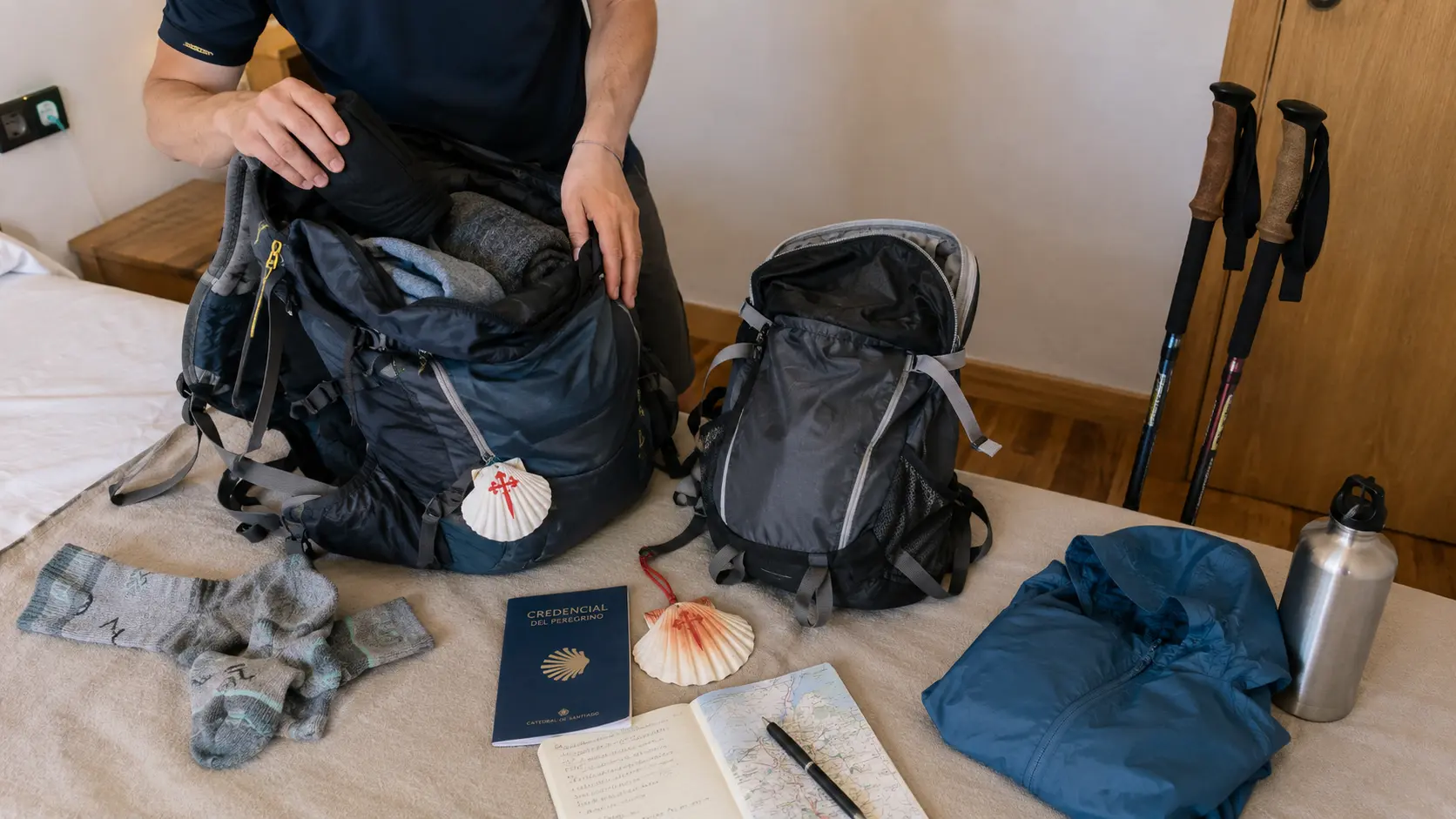
The best backpack size for Portuguese Coastal Camino walking is usually smaller than first-time pilgrims expect. This is not a wilderness trek where you need a tent, cooking kit or several days of food. For most pilgrims, the decision is about daily comfort, disciplined packing and whether you plan to carry everything yourself or use baggage transfer.
A larger backpack can feel safer before you leave. On the Camino, it often becomes a reason to pack more than you need.
Key takeaways
- Most pilgrims carrying their own gear should usually look at the 30 to 40 litre range, not a large expedition pack.
- If you use baggage transfer, your walking pack can normally be much smaller, but it still needs room for water, rain gear, layers and daily essentials.
- Fit, weight distribution and comfort after several hours matter more than the brand name on the backpack.
- A backpack above 45 litres can work, but it often encourages first-time pilgrims to overpack.
- The right size depends on your packing discipline, season, accommodation style, laundry plan and baggage strategy.
What size backpack do you need for the Portuguese Coastal Camino?
For most first-time pilgrims walking the Portuguese Coastal Camino and carrying their own gear, a 30 to 40 litre backpack is the most realistic starting point.
A 30 litre pack suits disciplined packers, warmer months, lighter clothing and pilgrims who are comfortable doing laundry regularly. A 35 litre pack gives a little more flexibility without encouraging too much extra gear. A 40 litre pack can work well if you walk in a cooler season, carry a sleeping bag liner, need extra layers, or simply want a small margin.
Once you move much above 40 litres, the question changes. It is no longer only “will everything fit?” The better question is “will I fill the empty space because it is there?”
The Portuguese Coastal Camino passes through towns and accommodation points. You are not usually packing as if you will be isolated for days. That is why a backpack designed for camping or expedition travel is usually more pack than most pilgrims need.
Backpack size decision table
| Backpack size | Best for | Main caution | Practical verdict |
|---|---|---|---|
| 20 to 25 litres | Pilgrims using baggage transfer most days. | Too small if you are carrying all clothing and overnight gear. | Good daypack size, not usually enough as your only pack. |
| 25 to 30 litres | Very light packers, warm weather, short Camino sections or strong laundry discipline. | Little margin for cooler layers or bulky items. | Possible, but less forgiving for beginners. |
| 30 to 35 litres | Most light to moderate packers carrying their own gear. | Requires clear decisions and no “just in case” packing. | Often the best balance for a simple Camino setup. |
| 35 to 40 litres | First-time pilgrims who want a little extra room without moving into a large trekking pack. | Can still be overfilled if you pack without limits. | The safest all-round range for many first-timers. |
| 40 to 45 litres | Cooler seasons, bulkier layers, larger body sizes, or pilgrims who need a little more structure. | Starts to invite extra clothing and duplicated gear. | Useful for some plans, but check the packed weight carefully. |
| 45 litres or more | Special cases, long travel before or after the Camino, or unusually bulky gear. | Often too much capacity for the Portuguese Coastal Camino itself. | Usually more than a first-time pilgrim needs for the walk. |
If you carry everything yourself
If you are carrying all your own gear from stage to stage, aim for a backpack that is large enough to pack neatly but small enough to force sensible choices.
For many pilgrims, that means 30 to 40 litres. Within that range, choose based on your real kit, not the fear that you might need something rare.
The practical test is simple: pack the bag fully, include water, then walk for at least one to two hours. If the pack pulls on your shoulders, swings as you move, rubs your hips, or makes you adjust it constantly, the issue may be weight, fit, or both.
Do not judge the backpack only by how it feels empty in a shop. A comfortable empty backpack can still be poor once loaded.
If you use baggage transfer
Baggage transfer changes the backpack decision. If your main bag is moved from accommodation to accommodation, you do not need a 35 or 40 litre walking pack for daily use. A smaller daypack in the 20 to 25 litre range is often enough.
That daypack still matters. You need space for water, snacks, rain protection, a warm or wind layer, sun protection, basic documents, valuables and anything you may need before your transferred bag arrives.
The common mistake is treating baggage transfer as permission to bring everything. It can make the walk easier, but it does not remove the need for a disciplined packing list.
If you are still deciding whether to carry your pack or send a bag ahead, compare the practical tradeoffs in our guide to Portuguese Coastal Camino baggage transfer.
Why a bigger backpack can make packing worse
A bigger backpack solves one problem and creates another. It makes packing at home easier, but it can make the walk harder.
First-time pilgrims often add items because there is still space: another fleece, a second pair of trousers, a larger towel, a backup pair of shoes, extra toiletries, a book, a large power bank or clothes for a version of the trip that probably will not happen.
That extra space becomes extra weight. Extra weight then affects your feet, shoulders, hips and energy across repeated walking days.
The better rule is not “choose the backpack that fits everything.” It is “choose the smallest comfortable backpack that fits the right things.”
What first-time pilgrims tend to overpack
Most overpacking does not come from one ridiculous item. It comes from many reasonable items that survive the packing process because each one feels small.
- Too many spare clothes instead of a simple laundry rhythm.
- Full-size toiletries instead of smaller containers.
- Heavy towels instead of a compact quick-dry option.
- Extra shoes that are not essential for the route.
- Backup gadgets, cables and batteries beyond realistic daily use.
- Bulky rain gear that has not been tested while walking.
- Warm layers chosen out of fear rather than season and forecast.
Before you increase backpack size, remove duplicated gear first. If you want a broader preparation check, read our guide to Portuguese Coastal Camino packing mistakes before you buy or finalise your kit.
Fit matters more than the exact litre number
Backpack size is important, but litres do not walk the Camino for you. Fit does.
A 35 litre pack that fits badly can feel worse than a 40 litre pack that transfers weight properly to your hips. Shoulder straps, hip belt shape, torso length, back ventilation and how the pack sits when loaded all affect comfort.
When possible, try the backpack with weight inside. Walk around. Bend, climb stairs, adjust the hip belt and check whether the load feels stable. Do not assume your normal height tells you the correct torso size. Backpack fit depends more on your back length and body shape than on height alone.
Also check the empty weight of the backpack. A heavier pack may feel supportive, but it uses part of your weight budget before you add any gear. A very light pack can be attractive, but it may be less forgiving if your load is not carefully packed.
How season changes the backpack decision
Season affects volume because clothing bulk changes. The difference between a warm-weather Camino and a cooler, wetter walking window is not always dramatic, but it matters.
In warmer months, a disciplined pilgrim may be comfortable closer to 30 litres because clothing is lighter and dries more easily. In shoulder seasons, 35 to 40 litres may be more realistic if you need a warmer layer, rain protection and slightly more flexible clothing.
Do not solve seasonal uncertainty by buying a very large pack. Solve it by choosing layers that work together, dry reasonably well and justify their place in the bag.
Backpack features worth checking
This article is not a product roundup, so the point is not to choose a brand. The point is to avoid buying a pack that is the wrong tool for the walk.
- Comfortable hip belt: useful if you carry your own gear, because it helps move load away from your shoulders.
- Adjustable torso or good size match: important for comfort over repeated walking days.
- Easy water access: side pockets or a hydration-compatible design can make drinking simpler while walking.
- Rain protection: either an included rain cover or a clear plan to keep important items dry.
- Simple access: pockets should help you reach essentials without unpacking everything each time.
- Ventilated back panel: useful on warmer or humid days, though not worth choosing if the overall fit is poor.
A backpack with many features is not automatically better. Extra zips, straps, compartments and accessories can add weight. Choose what helps your daily routine, not what looks useful in a shop.
How to test your backpack before the Camino
Do not wait until Porto to discover that your backpack is too heavy or badly fitted. Test it before departure with the items you actually plan to bring.
- Lay out everything you want to pack.
- Remove duplicated clothing, heavy toiletries and items you are packing only from anxiety.
- Pack the backpack as if you were leaving tomorrow.
- Add realistic water weight.
- Walk for one to two hours on mixed surfaces if possible.
- Notice pressure points, rubbing, shoulder pull and how stable the pack feels.
- Remove or replace gear before increasing backpack size.
If the pack is uncomfortable during a short test, it is unlikely to improve after several full walking days.
FAQ
Is a 30 litre backpack enough for the Portuguese Coastal Camino?
It can be enough if you pack lightly, walk in a warmer season, use compact clothing and do laundry regularly. For many first-time pilgrims, 30 litres works best when the packing list is already disciplined. If you are unsure, 35 litres may give a safer margin without becoming too large.
Is a 40 litre backpack too big for the Camino?
A 40 litre backpack is not automatically too big. It can be a good choice for first-time pilgrims who want more room, walk in cooler weather, or carry slightly bulkier gear. The caution is that you should not fill it just because space is available.
Do I need a framed backpack?
If you are carrying all your gear, a light internal frame or supportive structure can make the load more comfortable. If you are using baggage transfer and only carrying daily essentials, a smaller daypack may be enough. The best answer depends on the weight you actually carry.
Should I buy a backpack online without trying it?
Only if you can return it after testing it at home. Backpack fit is personal. If possible, try the pack loaded, not empty. A pack that looks right online may not fit your torso, hips or shoulder shape.
What is the biggest backpack mistake for first-time pilgrims?
The biggest mistake is choosing extra capacity to avoid making decisions. A bigger pack can hide overpacking until you start walking. Decide what you truly need first, then choose the backpack that carries that kit comfortably.
Your next step
Before buying a backpack, make three decisions: are you carrying everything yourself, are you using baggage transfer, and what season are you walking in?
Then pack your real kit, test it with water weight, and remove items before you size up. The right backpack is not the biggest one you can manage. It is the smallest comfortable pack that supports the Camino you are actually walking.